






OpenMetal Cloud IaaS Resources

OpenMetal delivers its infrastructure through its co-location in three state of the art data centers. Businesses in these locations around the world can benefit from OpenMetal’s IaaS offering.

Our resources cover various business aspects of using OpenMetal Cloud for infrastructure delivered as hosted private cloud, object storage, and bare metal.

Our documentation for technical teams using or running the cloud is under our Technical Documentation.

The content here is generally intended for:

  • CTOs or other executives deciding if they will use an OpenMetal Cloud Core and any Expansion Nodes.
  • Technical Researchers that are developing a plan for introducing the use of a private cloud to their company.
  • General researchers of private clouds that need more information.

New to OpenMetal?

Explore the power of your own cloud. See it in action as a hosted private cloud, for SaaS companies, for hosting and cloud providers, for managed service providers, and much more. Check out transparent pricing, and even try a free trial.

Fundamental Advantage of Using OpenMetal

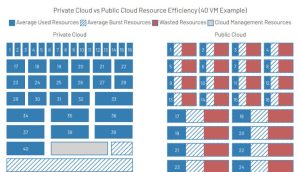
Your cloud uses private cloud resource management as it is fundamentally better for you.

Learn More

Cost Tipping Points

Cost Tipping Points of Public Cloud

As deployments grow, traditional public cloud becomes more and more expensive.

Learn More

Top Hosted Private Cloud Posts

The following articles discuss the advantages of private cloud hosting with OpenMetal.


Top Bare Metal Use Cases on OpenMetal

The following articles delve into some of the use cases that can be deployed on OpenMetal bare metal dedicated servers.


Top Bare Metal Hardware

The following articles delve into hardware details for OpenMetal bare metal servers.


Top OpenStack Posts

The following articles discuss use of On-Demand OpenStack with OpenMetal.


Top SaaS Provider Posts

The following articles discuss software-as-a-services (SaaS) providers’ uses of cloud with OpenMetal.


Top Education and Training Posts

The following articles are popular OpenStack learning resources. 


Top Partner and Reseller Posts

The following articles provide insight into selling OpenStack clouds through OpenMetal.


Use the articles above to explore the power of OpenMetal to deliver On-Demand OpenStack and Hosted Private Cloud. Check out transparent pricing. Or even request a trial. If you are not sure what you need, or have unique needs, schedule a complimentary consultation with our Cloud Team for assistance.

New Blog Content

Apr
28

Is Your AI Infrastructure Ready for the EU AI Act?

EU AI Act compliance is more than a legal project, but an architecture decision. This article breaks down the four infrastructure requirements high-risk AI systems must meet, where public cloud creates compliance gaps, and how dedicated EU infrastructure with hardware-level isolation changes the picture.

Apr
25

Hosted Private Cloud — Medium v5 — Granite Rapids Intel Xeon 6505P, 768GB DDR5, Micron 7500 MAX

The Hosted Private Cloud Medium v5 is a three-node OpenStack and Ceph cluster built on the same Medium v5 hardware available as a standalone bare metal server. Each node contributes

Apr
25

OpenMetal Medium v5 vs AWS i4i — Dedicated Infrastructure vs Shared Cloud

This page compares the OpenMetal Bare Metal Medium v5 against the AWS i4i.8xlarge, the closest EC2 instance by RAM and NVMe storage profile. The comparison is structural: tenancy model, billing

Apr
25

Bare Metal Server — Medium v5 TDX Edition — Xeon 6505P, 1TB DDR5, Micron 7500 MAX

The OpenMetal Medium v5 TDX Edition is the same Granite Rapids Xeon 6505P server as the standard Medium v5, configured with all 16 DIMM slots populated at 1 TB DDR5-6400

Apr
25

Bare Metal Server — Medium v5 — Granite Rapids Intel Xeon 6505P, 256GB DDR5, Micron 7500 MAX

The OpenMetal Medium v5 is the entry server in the v5 Granite Rapids lineup, built on dual Intel Xeon 6505P processors (Granite Rapids, Intel 3 process). It replaces the Medium

Apr
25

OpenMetal Medium v5 Bare Metal Server Specifications

Q: What are the specs of the OpenMetal Medium v5 bare metal server? Dual Intel Xeon 6505P processors (Granite Rapids, Intel 3) power the OpenMetal Medium v5, delivering 24 physical

Apr
25

OpenMetal Medium v5 vs Medium v4: Key Changes

Q: How does the OpenMetal Medium v5 compare to the Medium v4? Switching from the Medium v4 to the Medium v5 brings 113% more L3 cache per socket (48 MB

Apr
25

Intel Xeon Silver 4510 vs Xeon 6505P: Architecture Comparison

Q: What is the difference between the Intel Xeon Silver 4510 and the Intel Xeon 6505P? The Xeon 6505P (Granite Rapids, Intel 3 process) more than doubles the L3 cache

Apr
25

NVMe Drives in the OpenMetal Medium v5 Bare Metal Server

Q: What NVMe drives does OpenMetal use in the Medium v5 bare metal server? The OpenMetal Medium v5 uses the Micron 7500 MAX 6.4 TB NVMe as its data drive,

Apr
25

Maximum RAM in the OpenMetal Medium v5 Bare Metal Server

Q: What is the maximum RAM in an OpenMetal Medium v5 bare metal server? The OpenMetal Medium v5 supports up to 2 TB of DDR5-6400 ECC RDIMM across its 16

Apr
25

Intel TDX Support on the OpenMetal Medium v5

Q: Does the OpenMetal Medium v5 support Intel TDX confidential computing? The OpenMetal Medium v5 supports Intel TDX, but it is not enabled at the base 256 GB configuration; TDX

Apr
25

RAM Upgrade Required to Enable TDX on the OpenMetal Medium v5

Q: What RAM upgrade is required to enable Intel TDX on the OpenMetal Medium v5? Enabling Intel TDX on the OpenMetal Medium v5 requires replacing all 8 installed 32 GB

Apr
25

How Intel TDX Remote Attestation Works on OpenMetal Bare Metal

Q: How does Intel TDX remote attestation work on OpenMetal bare metal servers? Intel TDX remote attestation on OpenMetal bare metal servers generates a hardware-rooted ECDSA-signed quote containing a cryptographic

Apr
25

OpenMetal BAA Availability for HIPAA Workloads

Q: Can OpenMetal provide a BAA for HIPAA-covered workloads? OpenMetal holds HIPAA compliance at the organizational level and offers Business Associate Agreements (BAAs) for customers processing protected health information on

Apr
23

OpenMetal XXL v4 vs AWS x2idn — Dedicated Bare Metal vs Cloud Infrastructure

This page compares the OpenMetal Bare Metal Dedicated Server XXL v4 with the AWS x2idn.32xlarge and x2idn.metal — the closest AWS equivalents by RAM profile for high-memory, NVMe-accelerated workloads. Both

Apr
23

Hosted Private Cloud — XXL v4 — Intel Xeon Gold 6530, 6TB DDR5, 115.2TB NVMe Cluster

The OpenMetal Hosted Private Cloud on XXL v4 hardware delivers a three-node OpenStack + Ceph cluster built on the highest-density compute and storage nodes in the v4 generation — ready

Apr
23

Bare Metal Server — XXL v4 TDX Edition — Intel Xeon Gold 6530, 2048GB DDR5, Intel TDX Active

This page covers the OpenMetal XXL v4 configured as a confidential computing platform. The XXL v4 is the only server in the OpenMetal v4 lineup where Intel TDX (Trust Domain

Apr
23

Bare Metal Server — XXL v4 — 5th Gen Intel Xeon Gold 6530, 2048GB DDR5, Micron 7500 MAX

The OpenMetal XXL v4 is the largest bare metal server in the v4 generation lineup, designed for workloads that demand the maximum combination of CPU thread density, memory capacity, and

Apr
23

OpenMetal XL v4 vs XXL v4: Key Differences

Q: What is the difference between the OpenMetal XL v4 and XXL v4? The OpenMetal XL v4 and XXL v4 share the same processor — dual Intel Xeon Gold 6530

Apr
23

NVMe Drives in the OpenMetal XXL v4 Server

Q: What NVMe drives does OpenMetal use in the XXL v4 bare metal server? The OpenMetal XXL v4 includes six Micron 7500 MAX 6400GB NVMe SSDs as data drives, delivering

Apr
23

RAM Upgrades on a Deployed OpenMetal XXL v4

Q: Can I upgrade the RAM on a deployed OpenMetal XXL v4 bare metal server? RAM on a deployed OpenMetal XXL v4 can be expanded beyond the base 2048GB configuration

Apr
23

Running Kubernetes on the OpenMetal XXL v4

Q: Can I run Kubernetes on an OpenMetal XXL v4 bare metal server? Kubernetes runs on the OpenMetal XXL v4 bare metal server with full control over the distribution, CNI,

Apr
23

Best Workloads for the OpenMetal XXL v4 Server

Q: What workloads is the OpenMetal XXL v4 best suited for? The OpenMetal XXL v4 is best suited for workloads that require sustained access to a large memory pool on

Apr
23

In-Memory Database Performance on the OpenMetal XXL v4

Q: How does the OpenMetal XXL v4 support large in-memory database workloads? The OpenMetal XXL v4 supports large in-memory database workloads through its 2048GB DDR5 base configuration, 320MB total L3

Apr
23

Maximum RAM Configuration on the OpenMetal XXL v4

Q: What is the maximum RAM configuration on the OpenMetal XXL v4? The OpenMetal XXL v4 supports a maximum of 8192GB of RAM across its 32 DIMM slots — four

Apr
23

Intel TDX vs SGX on OpenMetal Bare Metal Servers

Q: What is the difference between Intel TDX and Intel SGX on OpenMetal servers? Intel TDX isolates entire virtual machines from the hypervisor and other VMs; Intel SGX isolates individual

Apr
23

Running SGX Enclaves and TDX VMs on the Same OpenMetal Server

Q: Can I run Intel SGX enclaves and TDX VMs on the same OpenMetal server? Intel SGX enclaves and TDX VMs can run concurrently on the same OpenMetal XXL v4

Apr
23

RAM Requirement for Intel TDX on OpenMetal Bare Metal

Q: What is the RAM requirement to activate Intel TDX on OpenMetal bare metal servers? Activating Intel TDX on OpenMetal bare metal servers requires a minimum of 1TB of installed

Apr
23

Ceph Storage Capacity in a 3-Node XXL v4 OpenMetal Cluster

Q: What is the usable Ceph storage capacity in a 3-node OpenMetal XXL v4 cluster? A three-node OpenMetal XXL v4 Hosted Private Cloud cluster provides approximately 38.4TB of usable Ceph

Apr
23

OpenMetal XXL v4 vs AWS x2idn: Dedicated vs Cloud

Q: How does the OpenMetal XXL v4 compare to the AWS x2idn instance? The OpenMetal XXL v4 and AWS x2idn.32xlarge are both 2TB RAM platforms, but differ fundamentally in tenancy

Apr
23

OpenMetal vs AWS for 2TB RAM Server Cost

Q: Is OpenMetal cheaper than AWS for 2TB RAM dedicated servers? For sustained 24/7 workloads, OpenMetal’s fixed monthly pricing for the XXL v4 is typically lower than AWS x2idn.32xlarge on-demand

Apr
23

How US Companies Get EU Infrastructure Without Building EU Operations

EU expansion means facing data residency questions your US infrastructure can’t easily answer. This guide breaks down what EU customers actually need, why Amsterdam is the right location, how fixed-cost hosted infrastructure compares to hyperscaler EU regions, and what you don’t actually need to build.

Apr
22

OpenMetal XL v4 vs XL v4 High Frequency — Which Bare Metal Server Should You Choose?

OpenMetal offers two XL v4 bare metal configurations with the same chassis, the same 1TB DDR5 RAM, the same 25.6TB NVMe storage, and the same network tier — but fundamentally

Apr
22

Bare Metal Server — XL v4 High Frequency — 5th Gen Intel Xeon Gold 6544Y, 1TB DDR5-5200, Micron 7500 MAX

The XL v4 High Frequency is OpenMetal’s dedicated bare metal server for latency-sensitive workloads that need maximum clock speed over maximum thread count. Powered by dual 5th Gen Intel Xeon

Apr
22

Intel Speed Select Technology on OpenMetal Bare Metal Servers

Q: What is Intel Speed Select Technology and how does it improve latency on OpenMetal bare metal servers? Intel Speed Select Technology (SST) is Intel’s hardware mechanism for defining multiple

Apr
22

XL v4 vs XL v4 High Frequency: Which Server to Choose

Q: XL v4 vs XL v4 High Frequency: which OpenMetal bare metal server should I choose? Choose the XL v4 High Frequency when your workload’s critical path is serial —

Apr
22

Is the XL v4 High Frequency Suitable for HFT Infrastructure?

Q: Is OpenMetal’s XL v4 High Frequency server suitable for high-frequency trading infrastructure? The XL v4 High Frequency is well-suited for co-located HFT infrastructure because its 3.6 GHz base clock

Apr
22

DDR5-5200 vs DDR5-4800 on OpenMetal XL v4 Servers

Q: How does DDR5-5200 memory on the XL v4 High Frequency compare to DDR5-4800 on the standard XL v4? DDR5-5200 on the XL v4 High Frequency provides approximately 8% higher

Apr
22

When CPU Clock Speed Beats Core Count on Bare Metal

Q: When does higher CPU clock speed outperform higher core count for bare metal workloads? Higher CPU clock speed outperforms higher core count when the workload’s critical path cannot be

Apr
22

Multi-Cloud Disaster Recovery: Building a Hybrid DR Strategy with OpenMetal and AWS or Azure

Running production and recovery on the same provider creates vendor concentration risk that most DR plans don’t address. This article covers both hybrid DR architectures, how to choose the right direction for your organization, what hyperscaler DR actually costs, and the tooling that makes cross-provider recovery work reliably.

Apr
22

OpenMetal XL v4 Bare Metal Server Pricing

Q: How much does an OpenMetal XL v4 bare metal server cost? The OpenMetal XL v4 bare metal server is billed at a fixed monthly rate with no per-VM fees,

Apr
22

OpenMetal XL v3 vs XL v4: What Changed

Q: What is the difference between the OpenMetal XL v3 and XL v4? The XL v4 replaces the Intel Xeon Gold 6430 (Sapphire Rapids) with the Gold 6530 (Emerald Rapids),

Apr
22

NVMe Drives in the OpenMetal XL v4 Server

Q: What NVMe drives does OpenMetal use in the XL v4 server? The OpenMetal XL v4 ships four Micron 7500 MAX 6.4TB NVMe U.3 drives as data storage, providing 25.6TB

Apr
22

Best Workloads for the OpenMetal XL v4 Bare Metal Server

Q: What workloads are best suited for the OpenMetal XL v4? The XL v4’s combination of 64 dedicated cores, 1TB DDR5 RAM, and Intel TDX active by default makes it

Apr
22

How Intel AMX on the XL v4 Accelerates CPU-Based ML Inference

Q: How does Intel AMX on the XL v4 accelerate CPU-based ML inference? Intel AMX (Advanced Matrix Extensions) on the Xeon Gold 6530 provides dedicated BF16 and INT8 matrix multiply

Apr
22

Intel TDX on the OpenMetal XL v4: Enabled by Default

Q: Does the OpenMetal XL v4 support Intel TDX confidential computing? The OpenMetal XL v4 ships with Intel TDX active by default — no RAM upgrade and no configuration request

Apr
22

Running Confidential AI Inference on OpenMetal Bare Metal

Q: Can I run confidential AI inference on OpenMetal bare metal? Confidential AI inference — where model weights, inputs, and outputs are encrypted in hardware memory during execution — runs

Apr
22

OpenMetal XL v4 vs AWS i4i: Dedicated Bare Metal vs Cloud Instances

Q: How does the OpenMetal XL v4 compare to AWS i4i instances? The OpenMetal XL v4 provides 64 dedicated physical cores, 1TB of persistent DDR5 RAM, and 25.6TB of persistent

Apr
22

OpenMetal XL v4 vs AWS i4i — Dedicated Bare Metal vs Cloud Infrastructure

This page compares the OpenMetal Bare Metal Dedicated Server XL v4 with the AWS i4i.metal — the closest AWS equivalent by RAM and NVMe storage profile. Both offer approximately 1TB

Apr
22

Hosted Private Cloud — XL v4 — 5th Gen Intel Xeon Gold 6530, 1TB DDR5 per Node, OpenStack + Ceph

The OpenMetal Hosted Private Cloud XL v4 is a three-node OpenStack and Ceph cluster, each node running dual Intel Xeon Gold 6530 processors with 1TB DDR5 4800MHz RAM and 25.6TB

Additional Resources

Account Management

If you are a current customer and need to connect with your account manager or dedicated support engineer, please log in to your OpenMetal Central account and navigate to the Account Services section. 

OpenMetal Central Login

Pricing Estimator

Are you new to OpenMetal and need to estimate or compare costs? We stand for transparent pricing free of hidden costs and unnecessary license fees. Check out our online Pricing Estimator and then contact us if you have any questions. 

View Pricing

Cloud Core

Hyper-converged 3 server cluster supplies all the top OpenMetal features in a highly available configuration – all in 45 seconds. 

Expansion Nodes

Grow your cloud with flexible building blocks.

Learn More >

Storage Clusters

High performance, simple pricing, fair egress.

Learn More >

As a public cloud or cloud hosting provider, you’re no stranger to the challenge of offering competitive and profitable solutions to your customers while simultaneously reducing your workload. One way to achieve this balance is by incorporating a customizable, easy-to-manage private cloud solution into your offerings without investing in extensive infrastructure resources or requiring additional maintenance work. Well say hello to OpenMetal Cloud for Hosting and Public Cloud Providers!

Uncategorized

As businesses realize the growing costs of cloud, it becomes even more important to find alternative solutions.
This article presents the known benefits of private cloud, the factors that make organizations hesitant about the move, on-demand private cloud as the true alternative to public cloud, and also three business use cases that could reduce cloud spend while moving from a public cloud.

Kubernetes on OpenStack is a powerful combination. It helps organizations manage their applications and services. This power duo provides the flexibility to scale up or down as needed, while also allowing for easy deployment and management of applications. This is essential for an organizations success in today’s fast paced digital age where organizations must be able to deploy their applications quickly and efficiently, at scale, and across multiple environments.

OpenStack is undeniably a powerful and versatile cloud platform that many industries continue to adopt at an increasing rate. Obviously, we’re big fans! But, like any intricate technology, having a firm understanding of its inner workings is crucial for deriving maximum efficiency, especially if your business provides cloud or primarily online services. So today, we’ll be diving into the world of subscription ratios in OpenStack, which play a vital role in resource allocation across your infrastructure.

Private, hybrid, and open source cloud solutions offer managed IT service providers unparalleled control, customization, and security. While public cloud providers may have had their place in the growth of the cloud industry, it’s apparent that the future lies in more secure and flexible environments.

OpenShift is a powerful and flexible platform that can help you simplify the deployment and management of container-based applications, accelerate application delivery, and work with different types of infrastructure. If you’re looking for a comprehensive and easy-to-use platform for building and managing cloud-based applications, this offering is an excellent choice.

With public and private clouds as the traditional options, innovative alternative clouds have emerged and are making waves. Deciding which cloud to use for your organization requires careful consideration of factors such as your unique business needs, budget, security and compliance requirements, and other important factors. 

With automation tools such as Terraform, Kolla Ansible and Heat, organizations can automate their OpenStack cloud operations and reduce the time and effort required to manage their cloud environment. When organizations automate many of the functions within their OpenStack cloud, they can benefit from increased agility, scalability, reliability, security, cost savings, and improved customer experience.

A search on “public cloud advantages” will nearly always include some statements about public cloud being “less expensive” than alternatives.  Unfortunately, this common narrative is simply not true for many situations!

More information about alternatives to public cloud is needed to help leaders in IT explain when public cloud is right or when private cloud, bare metal, colocation, or owned data centers are the right choice.

The first step for deciding to run Kubernetes is to first understand if your environment is ready to run it. After that, it’s all about figuring out where you want to run Kubernetes. From a reliability, security, and cost perspective, running Kubernetes on OpenStack is never a bad idea. In this blog post, you’re going to learn about the key reasons why you’d want to run Kubernetes clusters on OpenStack.

There are many OpenStack projects that you can use to build a cloud that can handle your use case and workloads. While OpenStack projects work well together, they also work with other popular software because the open source community continually work on ways to optimize OpenStack and ensure that it is seamless to use other open source software that you may need.

What Is OpenStack?

OpenStack is an open source platform composed of several independent components. These components interoperate with each other through Application Programming Interface (API). These components are complementary, but do not depend on all other components to function properly. This grants you the ability to build your cloud with only the components you need.

If you’re implementing a specific technology for an organization, the overarching question that you must constantly ask yourself is “why use X technology”. Business leaders and engineers must understand why and how a platform will help fill their needs. There are an incredible amount of platforms and orchestration tools in the wild today, along with some from the past, but the burning desire for Kubernetes is running red hot.

For any application that you’re deploying, chances are you’ll have some sort of sensitive information that you need to pass into the app. Because of that, you’ll need a way to store that sensitive data for your containerized workloads – this is where Kubernetes secrets come in.

In this blog post, you’ll learn about what secrets are, how to create standard Kubernetes secrets, and how to get started with the OpenStack Key Manager.

Kubernetes Volumes on OpenStack

At the beginning of the Kubernetes era, many engineers had a concern – what about apps that have to store data? Kubernetes got a “reputation” of only being for stateless applications and applications that didn’t need to store data. However, that’s vastly changed over the years when implementing Kubernetes. In this blog post, you’re going to learn how to manage Kubernetes volumes and what CSIs are, along with how to install a CSI plugin on a Kubernetes cluster running in OpenStack.

OpenMetal was a first-time Gold Sponsor at the SaaStr Annual 2022. We got the opportunity to meet with leaders at SaaS companies from around the world. And we got a chance to unveil our open source On-Demand Private Cloud product as a viable option for SaaS companies, especially those facing open/capex challenges with relation to public cloud consumption. 

Creating repeatable and automated processes, especially for creating infrastructure layers, is drastically important. It’s the make or break between creating resources at scale and clicking a bunch of buttons for 90% of your day. In the past few years, the mantra for almost every engineering team has been move faster, and the way to do that is with proper automation. 

In this blog post, you’re going to learn about an important repeatable process, creating Kubernetes clusters using Magnum.

Security is at the forefront of every engineer’s mind when it comes to Kubernetes. When it comes to security and Kubernetes from an OpenStack perspective, one of the most significant pieces is Operations security. In this blog post, you’ll learn about Kubernetes security on OpenStack and how to manage it from an Ops perspective.

Many engineers believe that OpenStack is a “thing of the past”, but it’s not. In fact, it’s becoming increasingly popular all throughout not only Telco, but auto manufacturers and any other organization that needs the ability to scale and manage workloads a certain way. With OpenStack, you get to manage and maintain Kubernetes clusters the way that you want.

In this blog post, you’ll learn about why Kubernetes on OpenStack is valuable for organizations and how you can get started with it today.

Kubernetes on OpenStack for Telco

Wherever you search for OpenStack and Kubernetes, chances are you’ll run across something around Telecommunications (telco). Although OpenStack is used across many organizations, including Mercedes Benz, telco is typically the heaviest industry when it comes to OpenStack.

In this blog post, you’ll learn about Kubernetes on OpenStack for telco, which will most likely open your eyes to why you’d want to use Kubernetes on OpenStack for any industry.

OpenStack is an open source cloud computing infrastructure software that can be used to manage and control large scale deployments of virtual machines or to manage storage and networking resources in a cloud. Many organizations are turning to OpenStack because it is scalable, reliable, and grants you a great degree of control over the underlying infrastructure.

Serverless Computing the Next Big Thing

Serverless computing is one of the most exciting trends in cloud computing. It gives you the best of the cloud at the best cost efficiency. Web developers and application providers recognize serverless computing as the solution that best meets their needs, and they are inventing entirely new architectures and toolsets to get the most value out of cloud functions. They are striving to build high-performance, modern applications that can serve the most users globally at the lowest cost.

This article uses current cloud adoption and usage statistics to build on the discussion (in the video) between Todd Robinson, President of InMotion Hosting, and Marc Collier, COO of OpenInfra Foundation about the current challenges around the widespread adoption of OpenStack powered infrastructure, especially in the context of private clouds for SMBs.

Edge Computing is the New Server Room

Edge computing products that move the cloud closer to you are probably good solutions, especially for teams who have already successfully made the transition to a cloud-based architecture. It is very important, however, for companies new to the cloud or who have had difficulty with the cloud to consider carefully which setup and solutions are right for their needs.

2021 Cloud Market Growth Trends

The growth of cloud computing and cloud IT infrastructure for both public and private clouds is here to stay, strengthened by our expedited need for digital transformation to accommodate the permanently changing landscape of doing business, the increased availability of the internet, the adoption of more mobile devices around the world, an upheaval of the education system and the consumption of more and more big data.

Public cloud users are finding out that for all their convenience and so-called affordability, public clouds are often not suitable for their workloads. Serious work requires serious infrastructure. Private clouds are the perfect solution for experienced cloud professionals who are tired of shocking cloud bills, or disappointing performance from their public cloud infrastructure.

OpenStack historically has major barriers for SMBs (and really all organizations, enterprises included). These factors have put OpenStack private clouds out of reach for the vast majority of SMBs or organizations with similar constraints like smaller universities or mid-sized nonprofits. Our on-demand OpenStack platform was built to make OpenStack simple and accessible for everyone.

Many articles online compare “new innovative” services offered by big tech giants against each other, implying that there are no alternatives. But that’s not true, at least not anymore.

OpenStack has thousands of developers working on various cloud-oriented projects to provide the same services these public cloud providers offer. We’re only going to cover a couple of them here, but it should give you an idea of what to look for when looking at alternatives.

Companies are moving towards cloud adoption at record rates, yet there are still business owners reluctant to take the leap. Cloud adoption can create a host of benefits for companies. In having a good cloud strategy, you can improve flexibility, increase efficiency, and boost performance. In addition, cloud adoption can allow an organization to grow its proficiencies in a way that can lead to growth and innovation.

A vast majority of organizations have adopted either a public cloud or private cloud. Within these organizations, we’ve noticed a significant challenge for the IT professionals is to determine the right placement of their dollars against cloud services provided by either public clouds or private clouds.

The power of the private cloud must not be limited to technical adepts and certified pros. With a tight focus on key technologies and tools, with easy-to-follow documentation, InMotion Hosting’s Flex Metal Cloud product will allow both new and current OpenStack users to quickly build and deploy on-demand private clouds on OpenStack.