




















The Medium v4 TDX Edition is not a separate server model. It is the standard Medium v4 chassis with all 16 DIMM slots fully populated — 8 × 64 GB per socket — reaching 1 TB of DDR5-4400 ECC memory and activating Intel Trust Domain Extensions (TDX). The standard Medium v4 ships with 4 DIMMs per socket (4 of 8 memory channels active), which does not satisfy the full-channel-population requirement for TDX or SGX activation. Upgrading to 8 DIMMs per socket activates all 8 memory channels, doubles aggregate memory bandwidth to approximately 563 GB/s, and enables hardware-enforced VM isolation. This is OpenMetal’s entry point for TDX-capable bare metal — suited for regulated workloads, key management infrastructure, and small-scale multi-tenant isolation at a lower price point than the Large v4 TDX Edition. The RAM upgrade is a physical change scheduled through OpenMetal Support.
Key Takeaways
- Hardware-enforced VM isolation at entry cost: Intel TDX creates Trust Domains that encrypt each VM’s memory with per-TD CPU-managed keys. The hypervisor and host OS cannot read TD memory, even with root access. The Medium v4 TDX Edition is the lowest-cost OpenMetal server with TDX available.
- Full channel activation doubles memory bandwidth: The upgrade from 256 GB to 1 TB populates all 8 memory channels per socket — raising aggregate bandwidth from ~282 GB/s to ~563 GB/s. That bandwidth gain benefits in-memory encrypted databases and concurrent multi-TD workloads, not just total capacity.
- SGX enclaves alongside TDX: Intel SGX provides application-level encrypted enclaves (64 GB max EPC) for key management, certificate signing, and sensitive computation, independent of TDX VM isolation. Both technologies activate together when all DIMM slots are populated.
- No hypervisor licensing or attestation fees: TDX runs on OpenMetal dedicated bare metal with no VMware, no cloud attestation service charges, and no per-VM confidential computing surcharges.
- HIPAA-eligible with hardware isolation: OpenMetal is HIPAA compliant at the organizational level. For workloads involving protected health information, OpenMetal may be able to sign a Business Associate Agreement (BAA) with covered entities; BAA availability is confirmed with the OpenMetal sales team. TDX adds a hardware isolation layer on top of facility certifications for PHI workloads in Ashburn and Los Angeles.
- Fixed-cost egress: 95th-percentile billing — no per-GB charges on data leaving Trust Domains to the public internet.
Server Configuration at a Glance
| Component | Specification |
|---|---|
| Processor | 2x Intel Xeon Silver 4510 (5th Gen Intel Xeon Scalable, Emerald Rapids, Intel 7) |
| Total Cores / Threads | 24 cores / 48 threads |
| Base / Max Turbo Frequency | 2.4 GHz / 4.1 GHz |
| L3 Cache | 30 MB per processor (60 MB total) |
| TDP | 150W per processor |
| Memory | 1,024 GB (1 TB) DDR5-4400 ECC (16 DIMM slots, all 16 populated) |
| Intel TDX | Enabled (all 8 memory channels per socket active) |
| Intel SGX | Available with Intel SPS (64 GB max EPC) |
| TME-MK | Active (per-tenant memory encryption keys) |
| Boot Storage | 2x 960 GB SSD in RAID 1 (dedicated OS drives) |
| Data Storage | 1x 6.4 TB Micron 7500 MAX NVMe |
| Max Drive Bays | 6 drives |
| Private Bandwidth | 20 Gbps (2x 10 Gbps LACP bonded) |
| Public Bandwidth | 2 Gbps (burst up to 40 Gbps) |
| Network SLA | 99.96% base (actual >99.99% since 2022) |
| DDoS Protection | Included, up to 10 Gbps per IP |
| PCIe | PCIe 5.0 (80 lanes per processor) |
| Remote Management | Full IPMI access (power, console, BIOS, OS install) |
| Compliance | HIPAA-eligible (Ashburn, Los Angeles); SOC 1/2, ISO 27001, PCI-DSS (facility-level, varies by location) |
| Pricing | Fixed monthly — see openmetal.io/bare-metal-pricing |
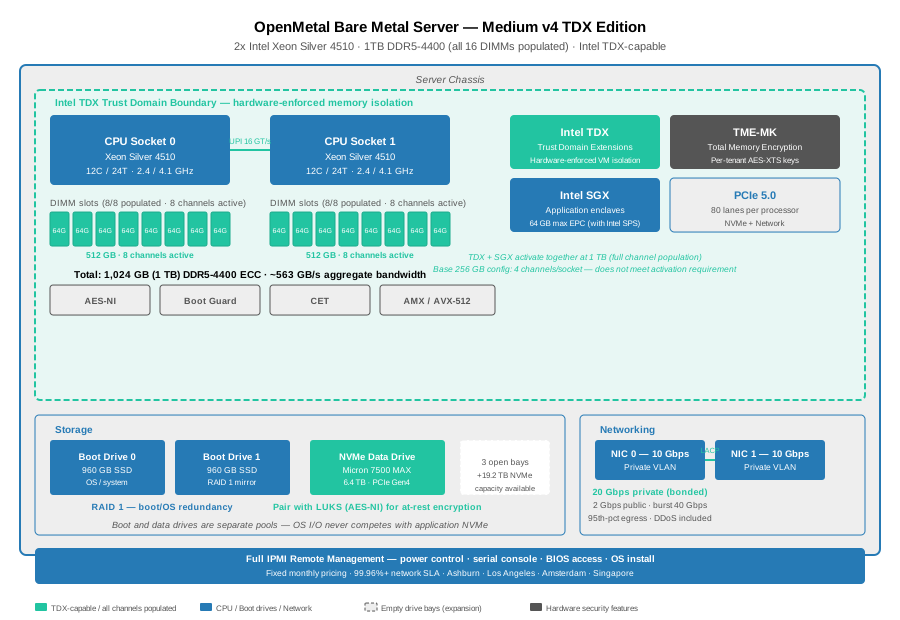
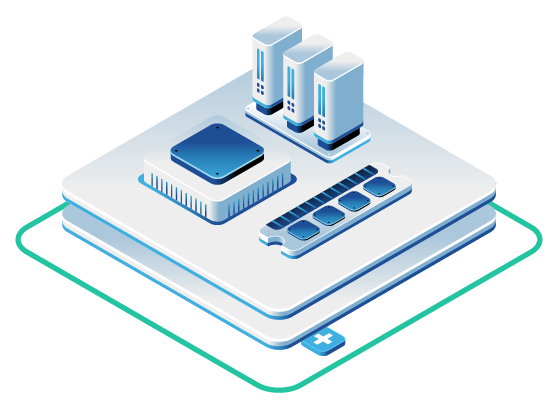
Medium v4 TDX Edition hardware architecture: full DIMM channel population (16 x 64 GB) activates Intel TDX and doubles aggregate memory bandwidth to ~563 GB/s.
Ready to Deploy a Medium v4 TDX Edition?
Tell us about your confidential computing requirements and we’ll help you configure the right deployment — bare metal with TDX enabled, or a Hosted Private Cloud cluster (SGX on nodes) paired with bare metal TDX servers for VM-level isolation.
Intel Xeon Silver 4510 for Confidential Computing
The Silver 4510 enforces TDX isolation boundaries in hardware through its memory controller. Each of the 24 cores (48 threads) can host Trust Domains at full clock speed; per-TD memory encryption and decryption occurs transparently in the memory pipeline rather than consuming core cycles. The 2.4 GHz base / 4.1 GHz turbo is suited to regulated workloads where isolation guarantees matter more than raw throughput — key management servers, compliance audit pipelines, and moderate-scale PHI processing.
Intel AMX (Advanced Matrix Extensions) remains accessible inside Trust Domains, allowing INT8/BF16 inference workloads to run with both hardware acceleration and TDX isolation. AVX-512 is available for vectorized compute inside TDs. PCIe 5.0 (80 lanes per processor) provides high-bandwidth connections to the Micron 7500 MAX NVMe and LACP-bonded network adapters, ensuring storage and network performance are not bottlenecked when TDs are active.
1 TB DDR5-4400 (Full Channel Population)
The TDX upgrade populates all 16 DIMM slots — 8 × 64 GB per socket. Beyond the capacity increase from 256 GB to 1 TB, full slot population activates all 8 memory channels per socket, raising aggregate memory bandwidth from approximately 282 GB/s (base configuration with 4 channels active per socket) to approximately 563 GB/s. This bandwidth increase matters directly for TDX workloads: Trust Domains performing encrypted memory operations benefit from the additional channel throughput, particularly in-memory databases holding regulated datasets and multi-TD environments where tenants simultaneously compete for memory bandwidth.
The 1 TB capacity supports memory-intensive confidential deployments: encrypted in-memory databases holding complete regulated datasets in RAM, 4–8 concurrent Trust Domains for multi-tenant isolation at moderate density, and ML inference pipelines processing sensitive data using AMX acceleration inside TDs. ECC error correction is standard across all slots, providing the bit-error resilience required for production compliance workloads.
Micron 7500 MAX NVMe
Boot and data isolation
The TDX Edition ships with the same storage layout as the standard Medium v4: 2x 960 GB SSDs in RAID 1 for OS redundancy and boot/data isolation, plus 1x 6.4 TB Micron 7500 MAX NVMe for data. Keeping system I/O off the data drive protects the NVMe for application workloads running inside Trust Domains. For confidential workloads, pair NVMe storage with LUKS full-disk encryption (hardware-accelerated via AES-NI) to protect data at rest independently of TDX’s in-memory protections — defense-in-depth for both in-flight and stored data. The chassis supports up to 6 total drives; 3 bays are open for additional NVMe capacity as key stores or encrypted databases grow.
Micron 7500 MAX NVMe data drives
For full NVMe performance specifications, see the standard Medium v4 hardware details page.
Networking
Dual 10 Gbps NICs (LACP bonded, 20 Gbps aggregate) carry private traffic on customer-specific VLANs at no cost. 2 Gbps public bandwidth with burst to 40 Gbps. TDX isolation boundaries apply to memory, not network I/O — network performance is unaffected by TDX being active. For confidential computing deployments, the private VLAN keeps inter-node traffic for replication and coordination off the public internet. Pair with IPsec or WireGuard (AES-NI accelerated) for encrypted inter-node communication when compliance policy requires in-transit encryption beyond the VLAN boundary.
Egress pricing: 95th-percentile billing, not per-GB transfer.
Public egress is billed on 95th-percentile measurement, not per-GB transfer. For confidential computing deployments, this model is particularly favorable: encrypted data transfers often occur in concentrated bursts during replication or export windows, not as steady-state traffic. On OpenMetal, those burst peaks are absorbed into the 95th-percentile calculation rather than accumulating per-byte charges. Additional 1 Gbps public egress is available at $375/month in advance, or billed at 95th percentile for overages in arrears.
Security and Confidential Computing
TDX is the defining characteristic of this configuration. Each Trust Domain (TD) is a hardware-isolated virtual machine whose memory is encrypted with a unique key managed by Intel’s Trust Domain Resource Manager (TDRM) inside the CPU. The hypervisor schedules and manages TDs but cannot read or modify their memory. This isolation is enforced by the memory controller — not by software — meaning a compromised hypervisor or host OS cannot access TD memory. On the Medium v4 TDX Edition, TDX activation is tied directly to the RAM upgrade: the Silver 4510 requires all 8 memory channels per socket to be populated before TDX can be enabled. Upgrading to 16 × 64 GB DIMMs satisfies this requirement. Contact OpenMetal to schedule the upgrade on a deployed server, or order a new Medium v4 with 1 TB pre-installed.
SGX operates at the application level, independent of TDX. SGX enclaves are encrypted memory regions protecting specific code and data from the host OS, hypervisor, and other processes — including other TDs. The Silver 4510 supports SGX with a maximum EPC of 64 GB. SGX and TDX can run concurrently: TDX isolates the VM boundary, SGX protects specific processes within those VMs. In the standard 256 GB Medium v4, the memory channel-population requirement affects both technologies. The 1 TB upgrade activates TDX and full SGX simultaneously. TME-MK (Total Memory Encryption — Multi-Key) encrypts all DRAM with per-tenant AES-XTS keys, active regardless of whether TDX or SGX is in use.
- AES-NI: Hardware-accelerated AES for TLS termination, full-disk encryption (LUKS), and VPN throughput without CPU overhead.
- Boot Guard: Firmware integrity verification during boot, preventing rootkit injection before the OS loads.
- Control-Flow Enforcement Technology (CET): Hardware-level protection against ROP/JOP attacks.
Recommended Workloads on the Medium v4 TDX Edition
Compliance-mandated workloads at entry scale
Organizations requiring TDX hardware isolation for PCI DSS, SOX, or regulated data processing — but without the compute requirements of the Large v4 — can start here. Payment processing audit trails, trade reporting pipelines, and compliance log aggregation needing infrastructure-level isolation fit the 24-core / 1 TB profile. The Medium v4 TDX Edition provides auditor-credible hardware isolation evidence without over-provisioning compute capacity.
Healthcare PHI processing
Smaller healthcare organizations, digital health SaaS providers, and clinical analytics pipelines processing limited patient volumes benefit from TDX isolation for PHI data at a lower infrastructure cost. A PHI processing pipeline running inside a Trust Domain has cryptographic provability that the host OS and hypervisor cannot access patient data. OpenMetal is HIPAA compliant at the organizational level, and covered entities can arrange a Business Associate Agreement with the OpenMetal sales team. Medium v4 TDX Edition servers deployed in Ashburn are hosted in a HIPAA-certified facility (NTT DATA VA1); in Los Angeles, HIPAA coverage is OpenMetal’s organizational-level compliance, not a facility certification. Together this combines organizational and hardware-level isolation into a multi-layer compliance posture.
Key management and certificate authority
HashiCorp Vault, KMIP servers, and custom PKI infrastructure run well on the Medium v4 TDX’s isolation model without requiring high core counts or large storage. Encryption keys remain in SGX enclaves (up to 64 GB EPC on the Silver 4510), protected from the host by TDX. The 6.4 TB Micron 7500 MAX handles key metadata and audit log storage. This configuration replaces dedicated hardware HSM appliances for most key management use cases while adding boot/data isolation and full IPMI access.
Secure multi-tenant application hosting
SaaS providers offering compliance-sensitive services to enterprise customers can run each tenant in a separate Trust Domain on shared hardware. TDX provides cryptographic proof that one tenant’s workload cannot read another’s memory, even in a compromised hypervisor scenario — stronger than container or hypervisor-based software isolation. The Medium v4 TDX Edition handles 4–8 concurrent TDs at typical memory density. For higher TD density, the Large v4 TDX Edition provides 32 cores and 12.8 TB storage.
Privacy-preserving analytics
Run analytics on sensitive datasets — financial records, health data, PII — inside Trust Domains where intermediate computation is never exposed to the host. Statistical disclosure control, differential privacy implementations, and k-anonymization pipelines can process raw PII with hardware-backed isolation. Intel AMX inside TDs accelerates matrix-heavy aggregation and pattern matching operations for in-enclave computation, so privacy-preserving workloads do not sacrifice throughput.
Blockchain validator key isolation
Run validator signing key management inside SGX enclaves nested within TDX Trust Domains for chains where slashing risk and key exposure are primary security concerns. Validator keys remain in plaintext only inside the enclave. TDX ensures the host cannot tamper with signing operations. Fixed monthly pricing removes the cost unpredictability of running isolation-sensitive validator infrastructure on per-hour cloud instances.
Ready to Deploy a Medium v4 TDX Edition?
Tell us about your confidential computing requirements and we’ll help you configure the right deployment — bare metal with TDX enabled, or a Hosted Private Cloud cluster (SGX on nodes) paired with bare metal TDX servers for VM-level isolation.
Medium v4 TDX Edition Deployment Options
Bare Metal Dedicated Server with TDX
Order a new Medium v4 with 1 TB RAM pre-installed (ships TDX-ready; you enable it in the server BIOS), or upgrade an existing deployed Medium v4 by contacting OpenMetal Support to schedule the physical RAM replacement. Full root access and IPMI remote management. Fixed monthly pricing with rate locks up to 5 years. Ramp pricing is available for migrations from other providers, allowing you to avoid paying for two environments simultaneously during the transition.
Confidential workloads: pair the HPC with bare metal Medium v4 TDX
Intel TDX is bare-metal-only — it is not available on the Hosted Private Cloud. Customers who want a managed OpenStack + Ceph cluster alongside confidential computing run a standard Medium v4 Hosted Private Cloud for general workloads and pair it with one or more bare metal Medium v4 TDX servers on the same private network; confidential VMs run under hardware-isolated Trust Domains on the bare metal TDX servers, while SGX enclaves on the cluster nodes cover application-level secrets. OpenMetal handles Day 2 operations on the cluster, including monitoring, patching, and incident response. No VMware licensing costs, no vSphere fees.
Where to deploy
Deploy a Medium v4 TDX Edition bare metal server or Hosted Private Cloud cluster in Ashburn, Los Angeles, Amsterdam, or Singapore. All locations offer the same fixed monthly pricing regardless of region.
| Location | Region | Facility Certifications | Location Page |
|---|---|---|---|
| Ashburn, Virginia | US-East | SOC1/2 Type II, ISO 27001, PCI DSS, NIST 800-53, HIPAA | Ashburn facility specs |
| Los Angeles, California | US-West | SOC1/2, ISO 27001, PCI-DSS, HIPAA | Los Angeles facility specs |
| Amsterdam, Netherlands | EU-West | SOC Type 1/2, PCI-DSS, ISO 27001, ISO 50001, ISO 22301 | Amsterdam facility specs |
| Singapore | Asia | BCA Green Mark Platinum | Singapore facility specs |
All facilities are Tier III data center spaces. Facility certifications are held by the facility operator. Proof of Concept clusters are available for testing TDX isolation, attestation workflows, and workload validation before committing to a production deployment.
→ View pricing: openmetal.io/bare-metal-pricing
All deployments: available across OpenMetal’s Tier III data center locations. Fixed monthly pricing applies regardless of utilization. No per-hour, per-query, or per-GB billing.
Get a Medium v4 TDX Edition Quote
Ready to deploy with confidential computing? Tell us about your isolation and compliance requirements and we’ll provide a custom quote for the Medium v4 TDX Edition — as a standalone bare metal server. Intel TDX is bare-metal-only; for general workloads, pair it with a Hosted Private Cloud cluster running SGX enclaves on each node.
- Bare metal: Single-server or multi-server TDX deployments with full root access and IPMI
- Hosted Private Cloud: Three-node OpenStack + Ceph clusters with Day 2 operations (pair with bare metal Medium v4 TDX servers for VM-level confidential computing)
- Custom configurations: Additional NVMe drives, SGX enclave sizing, attestation setup
Ramp pricing available for migrations. All deployments include fixed monthly pricing, 99.96%+ network SLA, and DDoS protection.
Product specifications, pricing, and availability may change due to market conditions and other factors. For the most current information, please contact the OpenMetal team directly.