





















In this article
- Understanding Pinecone’s Pricing Model
- The Self-Hosted Alternative: OpenMetal + Open Source Vector Databases
- Running the Numbers: The Break-Even Analysis
- Real-World Cost Scenarios
- Implementation: Setting Up Qdrant on OpenMetal
- The Hidden Costs of Self-Hosting (And How to Minimize Them)
- Alternative Open Source Options
- When to Stay on Pinecone vs When to Self-Host
- The Migration Checklist
- Case Study: Real-World Migration
- The Bigger Picture: Cloud Repatriation for AI Infrastructure
- Taking the First Step
- The Bottom Line
You launched your RAG-powered customer support chatbot three months ago. The Pinecone bill started at $50. Then $380. Last month it hit $2,847.
You’re not alone. AI startups across the industry are hitting the same wall: vector database costs that scale linearly with usage don’t align with businesses that need predictable infrastructure budgets. And there’s a specific mathematical tipping point where the economics flip entirely in favor of self-hosting.
This isn’t theoretical. According to a recent VentureBeat analysis, Pinecone (the poster child of managed vector databases) is reportedly exploring a sale while struggling with “customer churn” driven largely by cost concerns. Open source alternatives like Qdrant, Weaviate, and Milvus are gaining traction precisely because they offer a different cost model: fixed infrastructure spend with unlimited query capacity.
The question isn’t whether Pinecone is a good product. It’s excellent for prototyping and getting to market fast. The question is at what usage level does paying per-query become more expensive than owning dedicated hardware?
Let’s do the math.
Understanding Pinecone’s Pricing Model
Pinecone’s serverless pricing (current as of December 2024) works like this:
Standard Plan:
- $50/month minimum commitment
- Storage: Charged per GB/month (pricing varies by region and cloud provider)
- Read operations: Usage-based per read unit (RU)
- Write operations: Usage-based per write unit (WU)
Important note on pricing transparency: Pinecone does not publicly list exact per-unit costs for read and write operations on their pricing page. Costs vary by cloud provider (AWS, Azure, GCP), region, and are calculated based on the complexity of each operation. The actual read unit consumption depends on factors like:
- Number of vectors in your index
- Vector dimensionality
- Metadata size
- Whether you’re using hybrid search
This makes it difficult to predict exact costs without testing. Industry analysis and third-party cost calculators suggest approximate ranges, but your actual costs will depend on your specific usage patterns.
For a typical RAG application using OpenAI’s 1536-dimension embeddings, here’s what real-world usage patterns might cost based on community benchmarks and user reports:
10 million vectors stored:
- Storage: ~60GB (cost varies by region)
- 5 million queries/month
- 500K writes/month
- Estimated total: $100-200/month (based on community reports and benchmarks)
50 million vectors stored:
- Storage: ~300GB
- 25 million queries/month
- 2 million writes/month
- Estimated total: $400-700/month
100 million vectors stored:
- Storage: ~600GB
- 50 million queries/month
- 5 million writes/month
- Estimated total: $800-1,400/month
Note: These are approximate estimates based on user reports and third-party analysis. Your actual costs may vary significantly based on your query patterns, metadata usage, and region. Pinecone recommends testing with your actual workload to determine accurate costs.
These costs assume moderate usage patterns for typical RAG applications. High-throughput systems serving real-time customer queries can easily exceed these numbers significantly.
The Self-Hosted Alternative: OpenMetal + Open Source Vector Databases
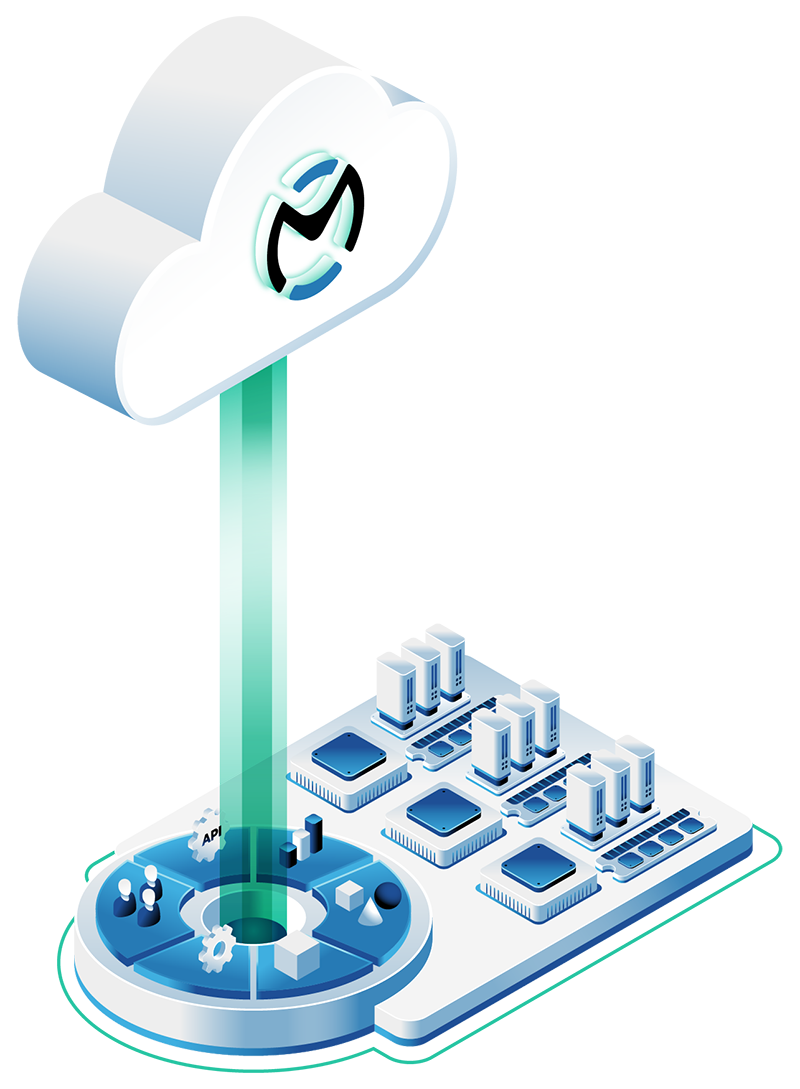 Now let’s look at the self-hosted option using OpenMetal’s Large v4 bare metal server with Qdrant, Weaviate, or Milvus.
OpenMetal Large V4 Specifications:
- Dual Intel Xeon Gold 6526Y (32 cores, 64 threads)
- 512GB DDR5-5200 RAM
- 2x 6.4TB Micron 7450 MAX NVMe (12.8TB total)
- 2x 10Gbps network
- Cost: Between $1,174/month (month-to-month) to $775/month (5-year commitment)
Why this hardware matters for vector databases:
1. RAM for In-Memory Indexes
With 512GB of RAM, you can keep massive vector indexes completely in memory:
- 100 million vectors (1536 dimensions): ~600GB storage, can fit ~400 million 768-dimension vectors entirely in RAM
- Sub-10ms query latency without disk access
- Eliminates “cold start” problems of serverless architectures
2. NVMe Performance
Micron 7450 MAX drives deliver:
- 1.7 million random read IOPS
- 2ms 99.9999% QoS latency
- Perfect for disk-backed indexes when working with billions of vectors
3. Network Capacity
- 20Gbps total network bandwidth (2x 10Gbps)
- Zero egress fees for private network traffic (included: 2Gbps per server, ~920TB/month)
- Critical for distributed vector search across multiple services
Running the Numbers: The Break-Even Analysis
Let’s compare total cost of ownership across different usage scales:
| Monthly Usage | Pinecone (Estimated) | OpenMetal Self-Hosted | Winner |
|---|---|---|---|
| 10M vectors, 5M queries | $100-200 | $1,174 | Pinecone |
| 25M vectors, 15M queries | $300-500 | $1,174 | Pinecone |
| 50M vectors, 30M queries | $600-900 | $1,174 | Pinecone |
| 100M vectors, 50M queries | $900-1,400 | $1,174 | Break-even |
| 100M vectors, 100M queries | $1,600-2,500 | $1,174 | OpenMetal |
| 200M vectors, 100M queries | $2,500-3,500 | $1,174 | OpenMetal |
The tipping point: ~60-80 million queries per month, or ~100 million vectors with high query volume.
Above this threshold, every additional query on Pinecone adds to your bill. On OpenMetal, it’s already paid for.
Cost advantage increases with commitment: With a 3-year or 5-year agreement, OpenMetal hardware costs drop between $938 to $775/month, significantly improving the economics.
Important: These Pinecone estimates are based on community reports and third-party analysis since exact pricing isn’t publicly disclosed. Test with your actual workload to get precise numbers.
Real-World Cost Scenarios
Scenario 1: Customer Support RAG System
Profile:
- 50 million document chunks (customer tickets, knowledge base, product docs)
- 100 million queries/month (50K active users, ~2 queries per user per day)
- 2 million updates/month (new tickets, updated docs)
Pinecone (estimated): $1,800-2,800/month
OpenMetal (monthly billing): $1,174/month hardware + ~$750/month operations = $1,924/month
OpenMetal (5-year commitment): $775/month hardware + ~$750/month operations = $1,525/month
Annual savings (5-year): $3,300-15,300
Scenario 2: E-Commerce Recommendation Engine
Profile:
- 200 million product/user vectors
- 200 million queries/month (5M users, ~40 searches per user per month)
- 10 million writes/month (inventory updates, new user embeddings)
Pinecone (estimated): $4,000-6,000/month
OpenMetal (monthly, single server): $1,924/month
OpenMetal (5-year, 3-server HA cluster): $2,325/month hardware + $750/month operations = $3,075/month
Annual savings on 3-server HA (5-year): $11,100-35,100
Scenario 3: Multi-Tenant SaaS Platform
Profile:
- 100 million vectors across 500 customers
- 150 million queries/month (tenant isolation via namespaces)
- 5 million writes/month
Pinecone (estimated): $2,200-3,200/month
OpenMetal (monthly billing): $1,174/month hardware + $750/month operations + $100/month backup = $2,024/month
OpenMetal (5-year commitment): $775/month hardware + $750/month operations + $100/month backup = $1,625/month
Annual savings (5-year): $6,900-18,900
Disclaimer: Pinecone costs are estimates based on community reports and typical usage patterns. Actual costs depend on your specific implementation, query complexity, metadata usage, and region.
Implementation: Setting Up Qdrant on OpenMetal
Here’s how to deploy a production-ready Qdrant vector database on OpenMetal Large V4 hardware:
Step 1: Initial Server Setup
# SSH into your OpenMetal Large V4 server
ssh root@your-server-ip

# Update system
apt update && apt upgrade -y

# Install Docker
curl -fsSL https://get.docker.com -o get-docker.sh
sh get-docker.sh

# Install Docker Compose
apt install docker-compose -y
Step 2: Configure Storage for Optimal Performance
# Mount one NVMe drive for Qdrant data
mkdir -p /mnt/nvme0/qdrant-data
mkdir -p /mnt/nvme0/qdrant-snapshots

# Set up the second NVMe for backups
mkdir -p /mnt/nvme1/qdrant-backups
Step 3: Deploy Qdrant with Docker Compose
Create /opt/qdrant/docker-compose.yml:
version: '3.8'

services:
  qdrant:
    image: qdrant/qdrant:v1.7.4
    container_name: qdrant
    restart: unless-stopped
    ports:
      - "6333:6333"  # HTTP API
      - "6334:6334"  # gRPC API
    volumes:
      - /mnt/nvme0/qdrant-data:/qdrant/storage
      - /mnt/nvme0/qdrant-snapshots:/qdrant/snapshots
    environment:
      - QDRANT__SERVICE__HTTP_PORT=6333
      - QDRANT__SERVICE__GRPC_PORT=6334
      # Enable JWT authentication for production
      - QDRANT__SERVICE__API_KEY=${QDRANT_API_KEY}
    ulimits:
      nofile:
        soft: 65536
        hard: 65536
    # Allocate 256GB RAM to Qdrant (leave 256GB for OS and buffer cache)
    mem_limit: 256g
    deploy:
      resources:
        limits:
          cpus: '32'
          memory: 256g
Step 4: Configure Qdrant for Production
Create /opt/qdrant/config.yaml:
service:
  # Maximum request size (important for batch operations)
  max_request_size_mb: 128

storage:
  # Store vectors on disk with memory-mapped files
  # This allows working with datasets larger than RAM
  on_disk_payload: false

  # Use HNSW index for fast similarity search
  hnsw_index:
    m: 16  # Number of edges per node
    ef_construct: 100  # Quality of index construction
    full_scan_threshold: 10000

  # Optimize for throughput vs latency
  optimizers:
    # Lower values = better latency, higher values = better throughput
    default_segment_number: 4

    # Memory optimization
    max_segment_size_kb: 2000000  # 2GB segments
    memmap_threshold_kb: 50000     # Use memory mapping for segments >50MB

    # Indexing optimization
    indexing_threshold_kb: 20000
    flush_interval_sec: 5
Step 5: Security Hardening
# Generate a strong API key
QDRANT_API_KEY=$(openssl rand -base64 32)
echo "QDRANT_API_KEY=$QDRANT_API_KEY" > /opt/qdrant/.env

# Set up firewall (only allow access from your application servers)
ufw allow from YOUR_APP_SERVER_IP to any port 6333 proto tcp
ufw allow from YOUR_APP_SERVER_IP to any port 6334 proto tcp
ufw enable
Step 6: Deploy and Verify
cd /opt/qdrant
docker-compose up -d

# Check logs
docker logs -f qdrant

# Test API
curl http://localhost:6333/
Step 7: Load Your Vectors
Here’s a Python example for migrating from Pinecone to Qdrant:
from qdrant_client import QdrantClient
from qdrant_client.models import Distance, VectorParams, PointStruct
import pinecone

# Initialize clients
pinecone.init(api_key="your-pinecone-key", environment="us-west1-gcp")
pinecone_index = pinecone.Index("your-index-name")

qdrant_client = QdrantClient(
    host="your-openmetal-server-ip",
    port=6333,
    api_key="your-qdrant-api-key"
)

# Create collection in Qdrant
qdrant_client.create_collection(
    collection_name="your_collection",
    vectors_config=VectorParams(
        size=1536,  # OpenAI embedding dimension
        distance=Distance.COSINE
    )
)

# Migration function with batching
def migrate_vectors(batch_size=1000):
    # Fetch from Pinecone (implement pagination as needed)
    results = pinecone_index.query(
        vector=[0]*1536,  # Dummy query to list all
        top_k=10000,
        include_values=True,
        include_metadata=True
    )

    # Batch insert into Qdrant
    points = []
    for idx, match in enumerate(results['matches']):
        points.append(
            PointStruct(
                id=idx,
                vector=match['values'],
                payload=match.get('metadata', {})
            )
        )

        # Insert in batches
        if len(points) >= batch_size:
            qdrant_client.upsert(
                collection_name="your_collection",
                points=points
            )
            points = []
            print(f"Migrated {idx + 1} vectors...")

    # Insert remaining
    if points:
        qdrant_client.upsert(
            collection_name="your_collection",
            points=points
        )

# Run migration
migrate_vectors()
Performance Tuning for Scale
For workloads exceeding 100 million vectors:
1. Use Quantization to Reduce Memory Usage:
from qdrant_client.models import ScalarQuantization, ScalarType

qdrant_client.update_collection(
    collection_name="your_collection",
    quantization_config=ScalarQuantization(
        scalar=ScalarType.INT8,
        quantile=0.99,
        always_ram=True
    )
)
This reduces memory usage by 75% with minimal accuracy loss.
2. Distribute Across Multiple Servers:
For high availability and horizontal scaling, deploy a 3-server Qdrant cluster:
# docker-compose.yml for distributed setup
services:
  qdrant-node-1:
    image: qdrant/qdrant:v1.7.4
    environment:
      - QDRANT__CLUSTER__ENABLED=true
      - QDRANT__CLUSTER__CONSENSUS__TICK_PERIOD_MS=100
      - QDRANT__CLUSTER__P2P__PORT=6335
    ports:
      - "6333:6333"
      - "6335:6335"
Cost: 3x Large V4 servers = $2,550-2,850/month for fault-tolerant, distributed vector search.
The Hidden Costs of Self-Hosting (And How to Minimize Them)
Self-hosting isn’t free beyond the hardware. Let’s be honest about operational overhead:
1. Setup Time
- Initial deployment: 4-8 hours (one-time)
- Migration from Pinecone: 8-24 hours depending on dataset size
- Tuning and optimization: 4-8 hours
Total: ~16-40 hours of engineering time
At $150/hour fully loaded cost, that’s $2,400-6,000 one-time investment.
Break-even: This is recovered in 2-7 months of savings at the tipping point usage level.
2. Ongoing Maintenance
- Monitoring and alerts: 2-4 hours/month
- Updates and patches: 2 hours/month
- Performance tuning: 2-4 hours/quarter
Total: ~4-6 hours/month = $600-900/month operational cost
3. Backup and Disaster Recovery
# Automated daily snapshots to second NVMe
#!/bin/bash
DATE=$(date +%Y%m%d)
docker exec qdrant curl -X POST "http://localhost:6333/collections/your_collection/snapshots"
cp /mnt/nvme0/qdrant-snapshots/* /mnt/nvme1/qdrant-backups/
Cost: Included in hardware (using second NVMe), or $50-100/month for S3-compatible object storage.
4. Monitoring Stack
# Add Prometheus and Grafana
services:
  prometheus:
    image: prom/prometheus
    volumes:
      - ./prometheus.yml:/etc/prometheus/prometheus.yml
    ports:
      - "9090:9090"

  grafana:
    image: grafana/grafana
    ports:
      - "3000:3000"
Qdrant exports Prometheus metrics natively. Use pre-built dashboards from the community.
Total Self-Hosting Cost:
- Hardware: $1,174/month (or $775/month with 5-year commitment)
- Operations: $600-900/month (4-6 eng hours)
- Monitoring/backup: $50/month
- Total: $1,824-2,124/month all-in (monthly billing)
- Total: $1,425-1,725/month all-in (5-year commitment)
Still cheaper than Pinecone at scale, and costs stay flat as query volume grows. With longer-term commitments, the economics become even more favorable.
Alternative Open Source Options
While this guide focused on Qdrant, here are other excellent choices:
Weaviate
Best for: Hybrid search (combining vector similarity with keyword search)
services:
  weaviate:
    image: semitechnologies/weaviate:1.23.0
    ports:
      - "8080:8080"
    environment:
      QUERY_DEFAULTS_LIMIT: 25
      AUTHENTICATION_ANONYMOUS_ACCESS_ENABLED: 'false'
      PERSISTENCE_DATA_PATH: '/var/lib/weaviate'
      DEFAULT_VECTORIZER_MODULE: 'none'
    volumes:
      - /mnt/nvme0/weaviate:/var/lib/weaviate
Pros:
- GraphQL API
- Native hybrid search
- Built-in vectorization modules
Cons:
- Higher memory usage than Qdrant
- More complex configuration
Milvus
Best for: Billion-scale deployments with GPU acceleration
services:
  etcd:
    image: quay.io/coreos/etcd:v3.5.5
  minio:
    image: minio/minio:RELEASE.2023-03-20T20-16-18Z
  milvus:
    image: milvusdb/milvus:v2.3.3
    environment:
      ETCD_ENDPOINTS: etcd:2379
      MINIO_ADDRESS: minio:9000
    ports:
      - "19530:19530"
Pros:
- Highest raw performance
- GPU-accelerated indexing
- Kubernetes-native
Cons:
- Most complex to operate
- Requires more infrastructure (etcd, MinIO)
pgvector (PostgreSQL Extension)
Best for: Teams already using PostgreSQL who want to consolidate databases
-- Enable the extension
CREATE EXTENSION vector;

-- Create a table with vector column
CREATE TABLE embeddings (
  id BIGSERIAL PRIMARY KEY,
  content TEXT,
  embedding VECTOR(1536)
);

-- Create an index for fast similarity search
CREATE INDEX ON embeddings USING ivfflat (embedding vector_cosine_ops)
  WITH (lists = 100);
Pros:
- No new infrastructure
- Unified database
- Excellent for <10M vectors
Cons:
- Performance degrades at 50M+ vectors
- Not purpose-built for vector search
When to Stay on Pinecone vs When to Self-Host
Stay on Pinecone if:
1. You’re in the prototype/MVP phase
- Still validating product-market fit
- Query patterns are unpredictable
- Engineering resources are extremely limited
2. Usage is consistently low
- < 20 million queries/month
- < 50 million vectors
- Cost is $300-500/month or less
3. You need global multi-region
- Pinecone handles cross-region replication
- Self-hosting this requires significant complexity
4. You have zero DevOps capacity
- No one on the team comfortable with Docker, Linux, or infrastructure
- Compliance/security team won’t approve self-managed databases
Migrate to OpenMetal if:
1. You’ve hit the tipping point
- 30 million queries/month
- 50 million vectors with consistent query load
- Pinecone bill exceeds $800/month
2. Cost predictability matters
- VC funding runway considerations
- Need to forecast infrastructure costs accurately
- CFO demanding fixed infrastructure budgets
3. You have data sovereignty requirements
- GDPR, HIPAA, or other compliance needs
- Need to control exactly where data lives
- Can’t use multi-tenant SaaS for sensitive data
4. You need unlimited queries
- Running internal analytics with variable query patterns
- Batch processing or experimentation that would be expensive per-query
- Want to enable product features without worrying about infra costs
5. You’re building a data product
- Vector search is core to your business model
- Need maximum control over performance tuning
- Want to optimize costs at scale as a competitive advantage
The Migration Checklist
When you’re ready to make the move, follow this 8-step process:
Week 1: Planning and Setup
Day 1-2: Infrastructure Provisioning
- Order OpenMetal Large V4 server
- Configure SSH keys and basic security
- Set up VPN or private network access
- Install Docker and base dependencies
Day 3-4: Vector Database Deployment
- Choose vector database (Qdrant, Weaviate, or Milvus)
- Deploy using Docker Compose
- Configure storage paths on NVMe drives
- Set up authentication and firewall rules
- Deploy monitoring (Prometheus + Grafana)
Day 5: Testing and Tuning
- Run synthetic benchmark with test vectors
- Tune configuration for your dimension size
- Verify query latency meets requirements
- Test backup and restore procedures
Week 2: Data Migration
Day 1-2: Export from Pinecone
- Write migration script using Pinecone API
- Implement pagination for large datasets
- Test with small subset first
- Set up monitoring for migration progress
Day 3-4: Import to Self-Hosted
- Batch insert vectors (1000-5000 per batch)
- Include metadata in payload
- Verify data integrity (sample checks)
- Build indexes for optimal search
Day 5: Validation
- Compare query results between Pinecone and self-hosted
- Benchmark query latency
- Test with production-like query patterns
- Verify filtering and metadata search
Week 3: Parallel Operation
Day 1-3: Dual-Write Setup
- Modify application to write to both Pinecone and self-hosted
- Monitor synchronization lag
- Set up alerting for write failures
- Keep Pinecone as primary read source
Day 4-5: Traffic Shifting
- Route 10% of read traffic to self-hosted
- Monitor error rates and latency
- Gradually increase to 50%, then 100%
- Keep Pinecone running as fallback
Week 4: Cutover
Day 1: Full Production Traffic
- Route 100% of reads and writes to self-hosted
- Monitor closely for 48 hours
- Keep Pinecone subscription active as backup
Day 3-5: Optimization and Cleanup
- Fine-tune based on production patterns
- Implement automated backups
- Document runbooks for common operations
- Cancel Pinecone subscription once stable
Migration Case Study
Let’s walk through a composite example based on actual OpenMetal customer migrations:
Company: B2B SaaS platform with AI-powered document search
Profile:
- 80 million document chunks (contracts, emails, support tickets)
- 60 million queries/month (8,000 active users)
- 3 million writes/month (new documents and updates)
Previous Pinecone Cost: $1,850/month
Migration:
- Deployed Qdrant on OpenMetal Large V4
- Took 3 weeks total (part-time work by 1 engineer)
- Ran parallel for 2 weeks before full cutover
New OpenMetal Cost (monthly billing):
- Hardware: $1,174/month
- Operational overhead: ~6 hours/month @ $150/hour = $900/month
- Monitoring/backup: $50/month
- Total: $2,124/month
Wait, higher cost initially?
Yes, on monthly billing. But here’s what changed:
- Committed to 3-year agreement after 3 months of validation
- Hardware cost dropped to $900/month
- Total cost: $1,850/month (break-even with previous Pinecone cost)
- Query volume tripled over next 6 months as product grew
- Pinecone would have cost: $4,500-5,500/month
- OpenMetal cost: Still $1,850/month
- Annual savings: $32,000-44,000 (after initial validation period)
- Product benefits:
- Enabled unlimited internal analytics without cost concerns
- Launched “semantic search playground” feature for free accounts
- Reduced p99 query latency from 120ms to 45ms
- ROI timeline:
- Month 1-3: Validation on monthly billing (cost neutral to slightly higher)
- Month 4: Committed to 3-year agreement (break-even point)
- Month 6+: Query volume growth made savings dramatic
- 2-year total savings: $78,000-105,000
The Bigger Picture: Cloud Repatriation for AI Infrastructure
Vector databases are just one piece of a larger trend. AI startups are increasingly discovering that while public cloud and SaaS make sense for prototyping, owning infrastructure becomes more cost-effective at scale.
Why this is happening now:
- AI workloads are predictable: Unlike web apps with spiky traffic, AI inference and RAG systems have relatively stable usage patterns. This makes fixed infrastructure costs attractive.
- The “virtualization tax” hurts more for AI: Pinecone runs on cloud infrastructure (likely AWS). You’re paying their markup on top of AWS’s markup. For compute-intensive AI workloads, that double-layer of margin adds up.
- Open-source vector databases have matured: Qdrant, Weaviate, and Milvus are production-ready with features matching or exceeding Pinecone’s capabilities.
- Hardware performance has accelerated: NVMe drives like Micron 7450/7500 MAX and DDR5 RAM make single-server deployments viable for workloads that previously required distributed systems.
- DevOps complexity has decreased: Docker, Kubernetes, and modern infrastructure-as-code tools make self-hosting far easier than it was five years ago.
According to VentureBeat’s recent analysis, Pinecone’s struggles aren’t about product quality. They’re about market dynamics: Postgres added pgvector, Elasticsearch added vector search, and open source alternatives undercut on cost. The vector database as a standalone product category is consolidating.
For AI startups watching their burn rate, this trend creates opportunity. The same infrastructure economics that led to cloud repatriation for traditional workloads (think Dropbox, Basecamp) now apply to AI infrastructure.
Taking the First Step
If you’re spending $800+/month on Pinecone and query volume is growing, it’s time to run the numbers.
Here’s your action plan:
Step 1: Calculate Your Tipping Point (15 minutes)
Use this simple formula:
Monthly Pinecone Bill = Storage Cost + (Queries × Read Cost) + (Writes × Write Cost)

OpenMetal All-In Cost (monthly billing) = $1,824-2,124/month
OpenMetal All-In Cost (5-year commitment) = $1,425-1,725/month

Break-even Query Volume = (OpenMetal Cost - Storage Cost) / Read Cost
If your current query volume is >75% of break-even, migration is financially justified. Consider starting with monthly billing to validate, then committing to a multi-year agreement for better economics.
You can also use OpenMetal’s pricing calculator to explore different hardware configurations and commitment terms.
Step 2: Test with OpenMetal Trial (1 week)
OpenMetal offers proof-of-concept trials with up to 30 days of testing, or self-serve trials for shorter evaluation periods:
- Deploy a test cluster
- Load a subset of your vectors
- Benchmark query performance
- Validate operational complexity
No commitment, and you’ll have hard data for your decision.
Step 3: Build Your Migration Plan (1 week)
Use the checklist above:
- Choose vector database (Qdrant recommended for ease of use)
- Estimate engineering hours needed
- Plan parallel operation period
- Define success metrics
Step 4: Execute the Migration (3-4 weeks)
Start small:
- Week 1: Infrastructure setup
- Week 2: Data migration
- Week 3: Parallel operation at 10-50% traffic
- Week 4: Full cutover
Step 5: Optimize and Scale (Ongoing)
Once stable:
- Fine-tune for your query patterns
- Implement automated monitoring and alerting
- Document procedures for your team
- Scale horizontally if needed (3-server cluster for HA)
Wrapping Up: When to Self Host Your Vector Database
Vector databases are infrastructure. At scale, you should own infrastructure, not rent it by the query.
The tipping point is clear: once you exceed 80-100 million queries per month with high-volume workloads, self-hosting on dedicated hardware becomes more economical than SaaS. For most AI startups, this happens between Series A and Series B, right when cost discipline starts mattering.
Pinecone is excellent for getting started. But as you scale, the economics favor ownership. OpenMetal’s Large V4 servers give you:
- 512GB RAM: Keep massive indexes in memory for sub-10ms queries
- 12.8TB NVMe: Micron 7450/7500 MAX drives with 1.7M IOPS
- Fixed costs: $1,174/month hardware (or $775/month with 5-year commitment), ~$1,850-2,100 all-in with operations
- Unlimited queries: Once paid for, every query is free
- Confidential computing: Optional Intel TDX support for secure vector search
The open source vector database ecosystem (Qdrant, Weaviate, Milvus) is mature, performant, and production-ready. Migration is straightforward, especially with the step-by-step process outlined above.
If you’re an AI founder watching your Pinecone bill climb month after month, this is your signal. The repatriation wave that hit traditional cloud workloads is now reaching AI infrastructure.
Ready to calculate your vector database tipping point? Apply for a proof-of-concept trial to test your actual workload on OpenMetal hardware. Get up to 30 days of hands-on testing with engineer-to-engineer support.
Want to discuss your specific requirements? Schedule a consultation with OpenMetal’s solutions engineering team to design your vector database migration strategy.
Schedule a Consultation
Get a deeper assessment and discuss your unique requirements.
Read More on the OpenMetal Blog