


















Over the last few years we’ve helped a lot of customers get their cloud costs under control. And one thing keeps coming up: the “infinite scale” promise of public cloud has turned into a variable-cost headache for companies running steady-state workloads.
I recently sat down with Anirudh Murali, co-founder of Economize, to talk about why OpenMetal acquired his company. The short answer is that we kept running into the same infrastructure problem in the market. To see why it matters, you have to look at the gap between how people think cloud infrastructure works and what it costs in practice.
What most people believe: Move everything to public cloud, take advantage of thousands of SKUs, refactor your apps to be “cloud-native,” and enjoy the flexibility.
What actually happens: You trade a known system with a predictable cost for a billing structure that swings month to month. You get buried in multi-account complexity. And you pay a premium for the ability to scale like Amazon on Black Friday, when 99% of the time you just need steady, reliable compute.
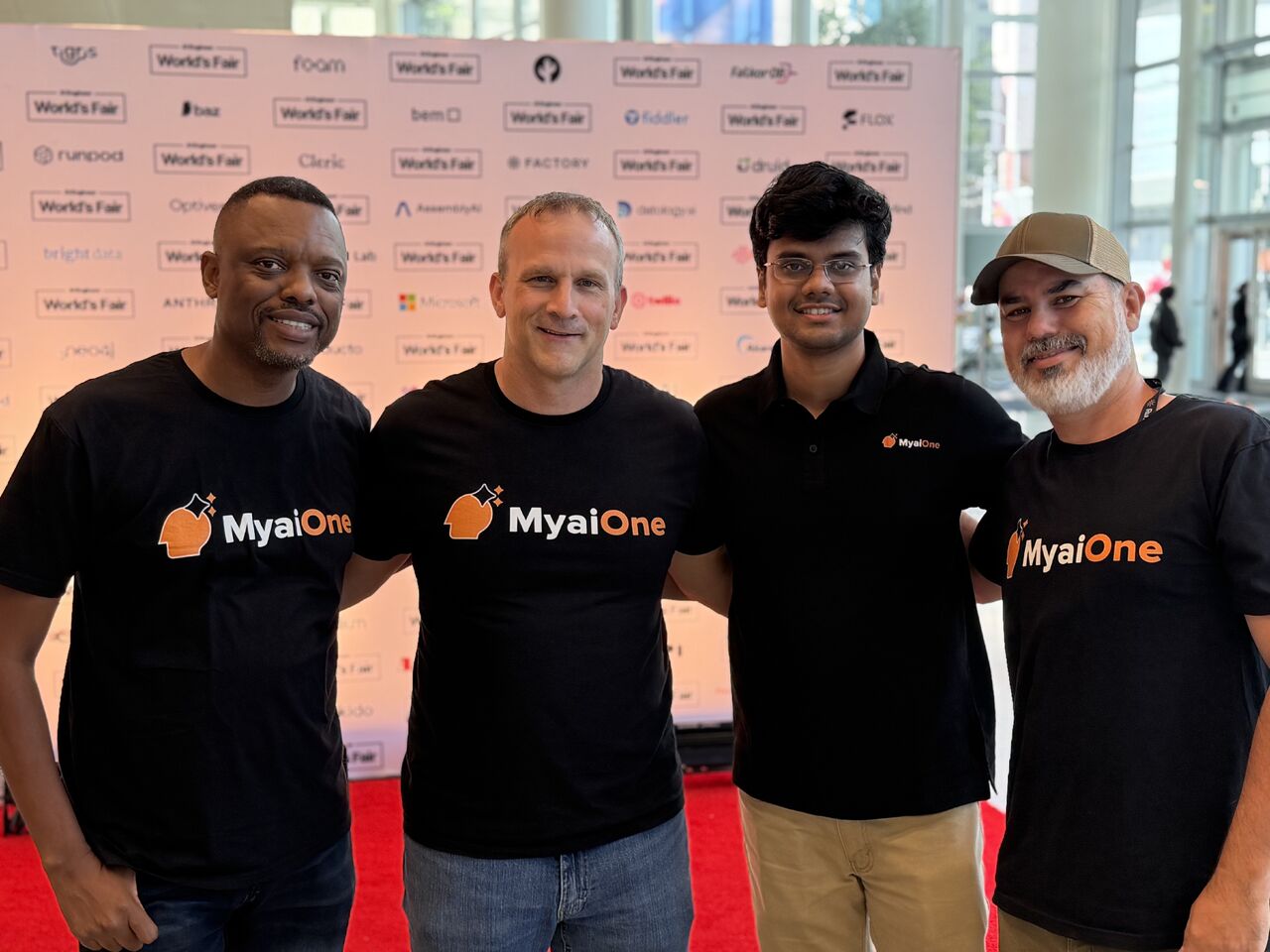
Anirudh and I met at a conference years ago, almost by accident. A friend of his had a meeting booked with me, the schedule shifted, and we ended up talking about WordPress hosting of all things. Somewhere in that conversation we realized we were working on two halves of the same problem.
In 2021, Anirudh and his co-founder Amrish built an agentless platform that gives engineering and FinOps teams granular visibility into cloud spend across AWS, GCP, and Azure. It shows you exactly where the money is going.
Anirudh’s team also helped us understand where companies actually spend. When we opened up that data, compute, block storage, and egress were at the top, followed by object storage and managed databases. You had to dig way down to find something like functions as a service. That told us exactly where to focus: do the top 10 things really well, and spare engineers from decoding a bill full of SKUs they used by accident.
Visibility is step one. Step two is having the architectural freedom to act on what you find.
Once your infrastructure crosses the public vs. private cloud cost tipping point, keeping steady-state workloads in public cloud costs you a lot more than running them on private cloud. The usual advice is to refactor your applications to be more efficient. That helps up to a point. After that, you’re spending your best engineers’ time tuning an overpriced environment when they could be building features for your core business.
Bringing Economize into OpenMetal puts both halves together: FinOps visibility from Economize, plus predictable-cost bare metal and private cloud infrastructure, which gives you a path off the hyperscalers when it makes sense. Economize already has a migration estimator that matches workloads to equivalent SKUs across cloud providers, and OpenMetal is now part of that comparison. You can see what your workloads would cost on private cloud before you commit to anything.
There’s a people side to this too. Many of our customers have large engineering teams in India. With the Economize team on board, we can offer follow-the-sun support, with our engineers talking directly to theirs during their working hours.
Introducing OpenMetal Labs
As workloads get bigger, the problems get more complicated. Billing accounts get merged after acquisitions, partners and resellers add layers, and migrations need real numbers before anyone signs off. We needed a clear path for those problems to come to us, so we built one. It’s called OpenMetal Labs.
Labs is the starting point for companies with complex infrastructure and billing problems. That could mean untangling multi-account billing, planning a large public-to-private cloud migration, or building custom FinOps tooling around how your organization works.
AI makes a lot of this faster than it used to be. White-labeled dashboards your team owns, Slack or Teams agents that flag spend changes, and cost views written for your finance team’s language are all things we can now build quickly.
Adapting to “The Rig”
At OpenMetal, we adapt the cloud to the customer’s workload. If you’re running something huge, why wouldn’t you? We’re applying the same thinking to cost management. For our largest customers, Economize will let them take our codebase, which has been through years of real-world iterations, and adapt it to their own workload and data flows using a specialized AI software factory we call “the rig.”
Your cost system should fit your environment, the same way your cloud should.
Getting Your Unit Economics Right
If you’re an executive trying to figure out what to do about your cloud bill, it comes down to unit economics.
If you make $100 and spend $60 of it on AWS, you’re never going to have a business that lasts. You can’t scale profitably when infrastructure costs are unpredictable and eating into your margins. You need a known system with a known cost, and that’s what we help companies get to: a margin they love.
We’re glad to welcome Anirudh and the Economize team to OpenMetal. Together, we want to give CTOs and CFOs a shared playbook for predictable infrastructure that can grow with the business.
If your team is dealing with a runaway public cloud bill or tricky FinOps problems, or you just want a second opinion on whether you’ve crossed the cost tipping point, we’re offering a free cloud cost audit. Reach out to the OpenMetal Labs team and let’s get your unit economics right.
And if you want to check out the full conversation between Anirudh and me, here it is!
Schedule a Consultation
Get a deeper assessment and discuss your unique requirements.
Read More on the OpenMetal Blog