



















Blockchain isn’t just for cryptocurrency anymore. It’s now being used to solve real-world problems in areas like healthcare, cybersecurity, logistics, and software development. To support these applications, many teams are turning to blockchain workloads on bare metal. This allows them to gain the performance, control, and scalability that virtualized environments can’t always deliver.
This blog explains what blockchain is and why bare metal servers are often the best choice for running these workloads.
What is Blockchain?
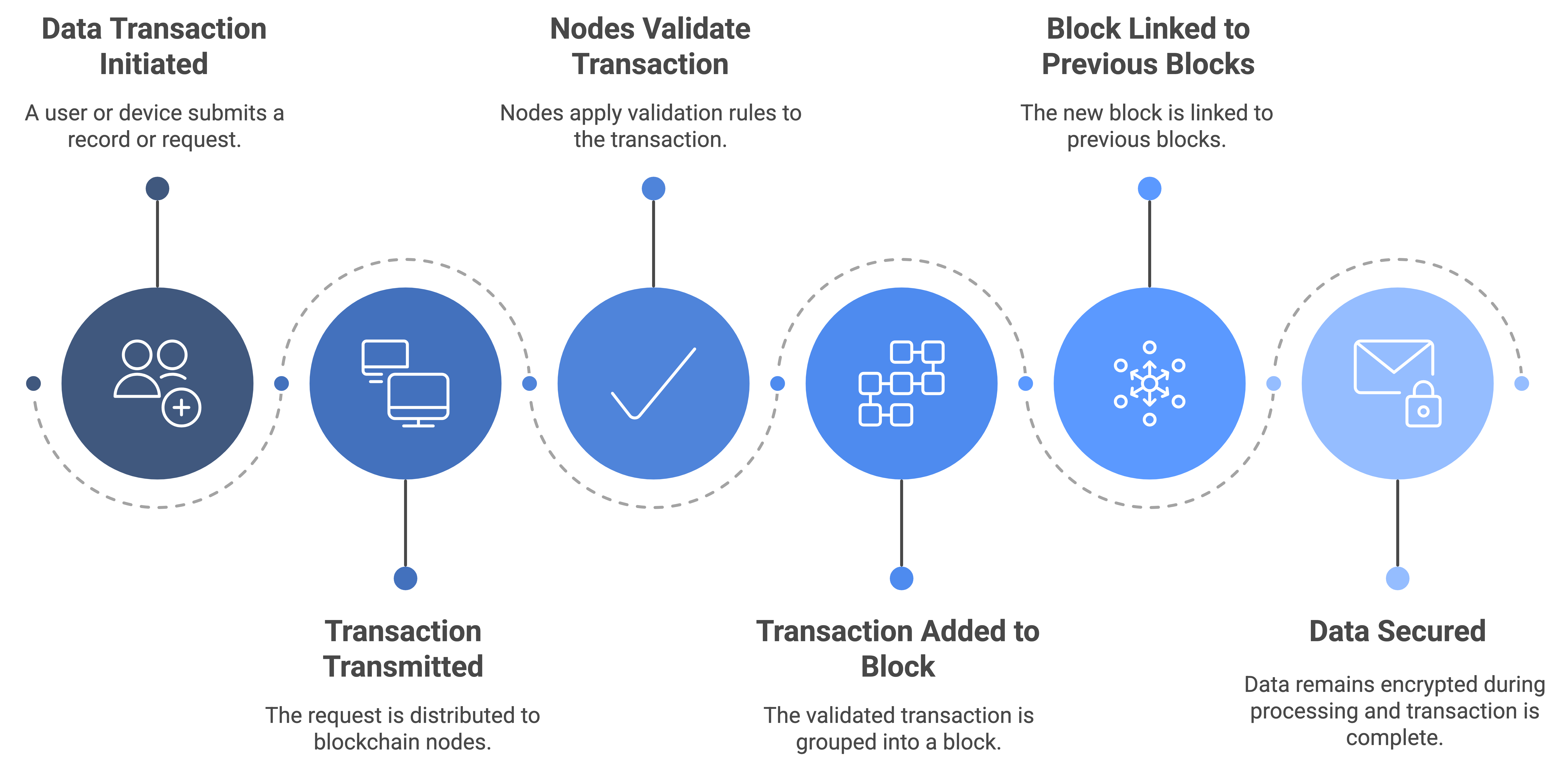
Blockchain is a type of technology used to store information in a way that’s secure, transparent, and very hard to change. Instead of saving data in one central place, like a traditional database, blockchain spreads it out across a network of computers. Every time a new piece of data (called a “block”) is added, it’s linked to the ones before it, creating a long chain of records.
Once data goes on the blockchain, changing it becomes extremely difficult. This makes it useful for situations where accuracy and trust really matter—like keeping track of medical records, product shipments, or who accessed what information.
Since everyone using the blockchain sees the same version of the data, there’s less room for confusion or fraud. Everyone has the same source of truth that doesn’t rely on one company or system to keep everything honest.
Understanding Mainnet and Testnet: The Foundation of Blockchain Development
Blockchain applications operate on two key environments: mainnet and testnet. Both play crucial roles in ensuring blockchain networks remain functional and secure.
Mainnet is the live version. It’s where real data and real users interact. Once something is added to the mainnet, it’s there to stay. This is where businesses handle verified transactions and run smart contracts in the real world.
- Example: A logistics company could use a mainnet blockchain as part of its advanced logistics management strategy to track goods from warehouse to customer. Because the data can’t be changed, it provides a reliable history for audits or recalls.
Testnet is the practice environment. Developers use it to test features, fix bugs, and try out updates without breaking anything important.
- Example: A healthcare startup could test how its patient data-sharing app works on a blockchain before launching it.
Why Blockchain Workloads on Bare Metal is a Smart Choice
Running a blockchain system takes more than just software—it needs the right hardware. Whether a company is building a data-sharing platform, supply chain tracker, or secure login system, the servers behind it need to handle a lot of work, fast and reliably.
Here’s what one of OpenMetal’s customers is using to run blockchain workloads effectively:
- Multi-core processors to support high-throughput transaction execution, parallel processing, and the consensus operations behind a Layer 1 blockchain platform.
- High memory capacity (256 GB DDR5 RAM), which allows for smooth operation across large-scale tests and simulations.
- Enterprise-grade SSD storage built for frequent read/write activity—critical for managing blockchain state changes and supporting storage-heavy apps.
For teams building foundational Web3 platforms or scaling blockchain infrastructure, bare metal offers consistent performance and full control without the unpredictability of shared or virtualized environments.
Bare metal servers are often a great choice for running blockchain workloads. They provide the kind of performance, control, and reliability that shared or virtual environments usually can’t match. Here’s how:
- High performance: Because these are dedicated servers, all of the machine’s power is focused on your workload—nothing is shared or slowed down by other users.
- Consistent pricing: Unlike cloud services that charge based on usage, bare metal servers usually have flat, predictable pricing.
- Better security and reliability: With no other customers on the same hardware, teams get full control and peace of mind.
- Extra protection if needed: For companies handling private or regulated data, bare metal also supports confidential computing tools like Intel TDX, which keep information encrypted even while it’s being processed.
How OpenMetal Supports Blockchain Workloads on Bare Metal
OpenMetal provides the tools and performance needed to run blockchain workloads on bare metal reliably—whether for private networks, smart contract development, or applications that require secure, tamper-proof data storage.
Hardware Designed for Demanding Workloads
OpenMetal offers a range of dedicated bare metal servers tailored for blockchain environments that require speed, consistency, and scalability.
- Medium V4: Equipped with Intel Xeon Silver 4510 processors, 256GB DDR5 RAM, and high-performance enterprise SSDs, this server is well-suited for development, testing, and blockchain workloads that demand reliable disk I/O without overprovisioning. It’s a great fit for teams looking to balance performance with cost-efficiency.
- Large V4: Built for higher-throughput workloads, the Large V4 includes dual Intel Xeon Gold 6526Y processors and 512GB of RAM. It’s ideal for handling consensus operations, processing smart contracts, and managing high transaction volumes.
- XL V4: With even greater compute and memory capacity, the XL V4 is designed for large-scale blockchain deployments, multi-node clusters, or environments that require headroom for complex workloads.
Security and Compliance-Ready
Each deployment uses dedicated, single-tenant servers, ensuring no shared resources. This improves both performance consistency and security. For sensitive workloads, confidential computing options are available, keeping data encrypted even during processing.
No Surprise Bandwidth Bills
Unlike some public cloud platforms, OpenMetal has generous bandwidth allotments per server and uses 95th percentile pricing model for overages. This results in low data egress fees, which means teams aren’t penalized for syncing data across systems or sharing records with external partners—something that happens often in blockchain networks.
Flexible for Growing Needs
As blockchain projects expand, OpenMetal makes it easy to scale by adding more servers or setting up a private cloud using OpenStack. This gives teams the flexibility of cloud services, while still getting the speed and control of bare metal.
Customer Use Cases: Blockchain Workloads on Bare Metal
Organizations are putting blockchain to work on OpenMetal’s bare metal servers beyond crypto. Here are a few examples of how it’s being used in the real world:
A Web3 Infrastructure Company
Our Web3 Infrastructure client is developing foundational technologies for the decentralized internet, including a Layer 1 blockchain and decentralized storage system. They are utilizing bare metal and scalable storage solutions to support both production and test environments.
Their blockchain platform, designed for fast and flexible dApp development, is being tested on Medium V4 servers, while their decentralized storage protocol runs on OpenMetal’s dedicated storage cluster.
They’ve deployed infrastructure across four OpenMetal data center locations, improving global availability and network performance. The move to OpenMetal helped them reduce infrastructure costs by 30%, while maintaining the flexibility and control needed to scale their Web3 services.
A Blockchain R&D Organization
Our client is focused on developing open-source infrastructure and tooling to improve the block production process and protect blockchain users from Maximal Extractable Value (MEV) exploitation. Their mission is to build secure, transparent systems that support a healthier blockchain ecosystem.
To support confidential computing workloads, the team began using OpenMetal’s Large V4 servers, which feature Intel Xeon Gold 6526Y processors and 512GB of RAM. The team provisioned these servers with SGX and BIOS access to support secure enclave testing.
They launched their initial deployment in one OpenMetal data center and plan to scale into additional regions. By partnering with OpenMetal, they gained access to a flexible and responsive team. They also reduced the time and complexity of sourcing TDX-capable hardware—while setting the stage for long-term vendor consolidation and cost savings.
A Crypto-Native Trading and Infrastructure Firm
The team at this firm specializes in algorithmic trading and liquidity solutions for digital asset exchanges and token projects. With a focus on low-latency, on-chain operations, their infrastructure supports high-frequency blockchain trading and Solana validator services.
They are using OpenMetal’s XL V4 bare metal servers to run Solana validator nodes, benefiting from high memory capacity, direct access to hardware-level networking, and a single-tenant environment optimized for performance. Their setup supports latency-sensitive features like polling mode and aligns with future plans for high-bandwidth, API-driven workloads.
The team chose OpenMetal as part of a broader vendor diversification strategy—ensuring infrastructure resilience and access to expert support as their blockchain operations scale.
We’ll dig deeper into each of these in future posts, but this gives a sense of how wide the impact of blockchain really is.
Wrapping it Up
Blockchain is evolving fast—and for companies building serious blockchain systems, the hardware matters. Bare metal gives you the power and control to support high-performance, secure, and reliable blockchain infrastructure.
Want to deploy a blockchain workload on high-performance infrastructure? Contact OpenMetal to explore our bare metal and private cloud solutions for blockchain applications.
About OpenMetal
OpenMetal provides innovative private cloud infrastructure tailored for businesses looking for greater autonomy, security, and control over their cloud environments. Leveraging OpenStack technology, OpenMetal delivers a flexible, cost-effective alternative to public hyperscalers, enabling organizations to host mission-critical applications and data with unparalleled efficiency and privacy.
Read More on the OpenMetal Blog