


















Modern Private Cloud Infrastructure, Built for Control and Predictability
Run scalable workloads on dedicated infrastructure with fixed monthly pricing and full visibility.
The Problem: Public Cloud Tradeoffs Are Catching Up
What Starts Flexible Becomes Expensive, and Opaque
Public cloud platforms like AWS, Azure, and Google Cloud offer speed—but at scale, many organizations hit a wall:
- Costs that fluctuate month to month
- Limited visibility into infrastructure performance
- Shared environments impacting consistency
- Complex pricing models (egress, IOPS, requests)
- Increasing pressure from finance teams to control spend
You don’t outgrow the cloud. You outgrow how it’s priced and controlled.
From the Podcast:
Benefits of the Modern Private Cloud
In this SourceForge podcast, OpenMetal President Todd Robinson breaks down why more organizations are moving away from hyperscalers and toward modern private cloud infrastructure.
- Predictable pricing without per-VM or per-IO billing surprises
- Dedicated hardware for consistent performance
- Full root access and control of the environment
- Open source infrastructure powered by OpenStack and Ceph
- Cloud APIs and automation tools for modern deployment workflows
- Day-2 operations tools including monitoring and orchestration
The OpenMetal Approach: Private Cloud, Reimagined
OpenMetal delivers hosted private cloud environments powered by OpenStack and Ceph, giving you the benefits of cloud without the unpredictability.
Dedicated Infrastructure with Cloud Flexibility
OpenMetal delivers hosted private cloud environments powered by OpenStack and Ceph—giving you the benefits of cloud without the unpredictability.
Single-Tenant, Always
Your infrastructure is fully dedicated—no noisy neighbors, no shared resources.
Predictable Monthly Pricing
No metering traps. No surprise egress fees. Just fixed, transparent costs.
Full Visibility & Control
Access your infrastructure directly:
- OpenStack Horizon UI
- Full API access
- Root + IPMI control
Built for Real Workloads
From enterprise apps to AI clusters:
- High-performance NVMe storage (Ceph)
- Software-defined networking
- Kubernetes-ready environments
Public Cloud vs OpenMetal (Quick Comparison)
| Feature | Public Cloud | OpenMetal |
|---|---|---|
| Pricing | Usage based, variable | Fixed cost, predictable |
| Infrastructure | Shared | Dedicated |
| Visibility | Abstracted | Fully exposed |
| Performance | Variable | Consistent |
| Platform | Proprietary | Open source |
Reference Architecture: Hosted Private Cloud
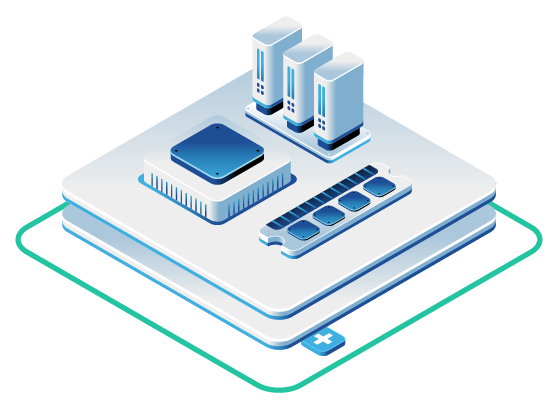
OpenMetal hosted private clouds are deployed using a Cloud Core cluster consisting of three hyper-converged servers.
These nodes run OpenStack for compute and networking and Ceph for distributed storage, creating a fully redundant cloud platform that supports virtual machines, Kubernetes clusters, and large-scale infrastructure workloads.
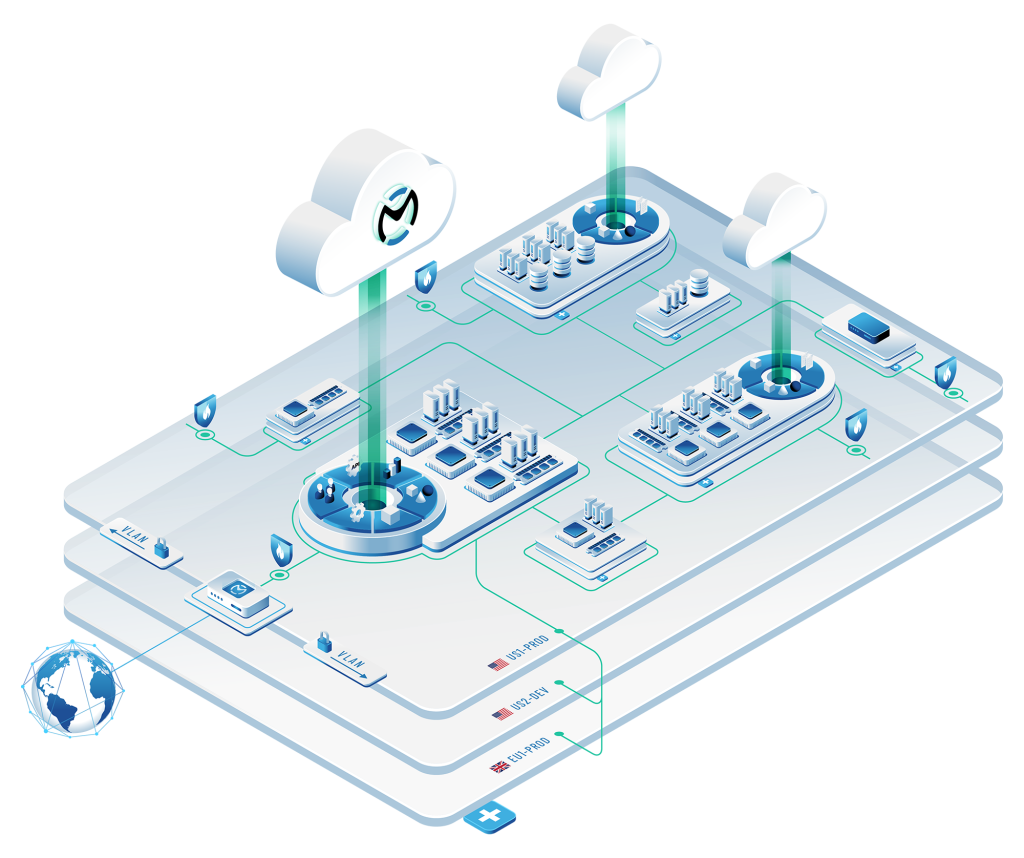
Core Components
Cloud Core Cluster
Three enterprise servers form the control and compute foundation of the cloud environment. This configuration provides quorum for high availability and enables resilient infrastructure services.
OpenStack Platform
OpenStack provides the API-driven cloud platform used to manage compute, networking, and storage resources.
Users can deploy virtual machines, configure software-defined networks, and automate infrastructure through APIs or Terraform.
Ceph Distributed Storage
Ceph provides distributed block storage across the cluster. Because data is replicated across nodes, workloads can survive individual hardware failures without service disruption.
Software-Defined Networking
OpenStack networking enables advanced capabilities including:
- isolated tenant networks
- floating IPs
- VLAN and overlay networking
- load balancing and routing services
This architecture delivers the same cloud capabilities teams expect from hyperscalers, but with dedicated infrastructure and transparent pricing.
How It Works
Steps:
- Deploy your Cloud Core (3-node hyperconverged cluster)
- Access your environment via OpenStack immediately
- Scale compute, storage, or GPU as needed
- Operate with full control and built-in monitoring
Who This Is For
- CTOs optimizing infrastructure strategy
- CFOs looking to control cloud spend
- DevOps teams needing performance consistency
- Enterprises migrating from VMware or hyperscalers
- AI/ML teams requiring dedicated compute