



















Public Cloud vs Hosted Private Cloud
Real Infrastructure Without the Cloud Cost Chaos
Many teams start in the public cloud for speed and convenience. But as workloads grow, the economics can become unpredictable. Hosted private cloud offers a different path: dedicated infrastructure delivered with the automation and flexibility of cloud platforms—without the pricing volatility.
Why Hosted Private Cloud?
Hosted private cloud combines the control of dedicated infrastructure with the automation of modern cloud platforms.
Instead of running on shared infrastructure where performance and costs fluctuate, your environment runs on dedicated servers designed for virtualization and production workloads.
Key advantages of OpenMetal Hosted Private Cloud include:
- Predictable pricing without per-VM or per-IO billing surprises
- Dedicated hardware for consistent performance
- Full root access and control of the environment
- Open source infrastructure powered by OpenStack and Ceph
- Cloud APIs and automation tools for modern deployment workflows
- Day-2 operations tools including monitoring and orchestration
This model is increasingly attractive for: SaaS platforms, virtualization clusters, Kubernetes infrastructure, AI and GPU workloads, database platforms, and VMware migration projects
Watch the Video
In this walkthrough, Rich Teslow from the 2GuysTek explores the differences between public cloud infrastructure and hosted private cloud, and why many organizations are rethinking their infrastructure strategy.
Topics covered include:
- Why public cloud costs can escalate quickly
- What hosted private cloud actually means
- How OpenStack powers OpenMetal clouds
- The difference between shared infrastructure and dedicated cloud environments
- When private cloud makes more sense for production workloads
Reference Architecture: Hosted Private Cloud
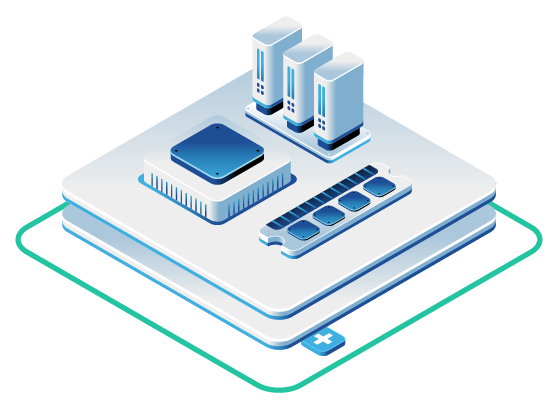
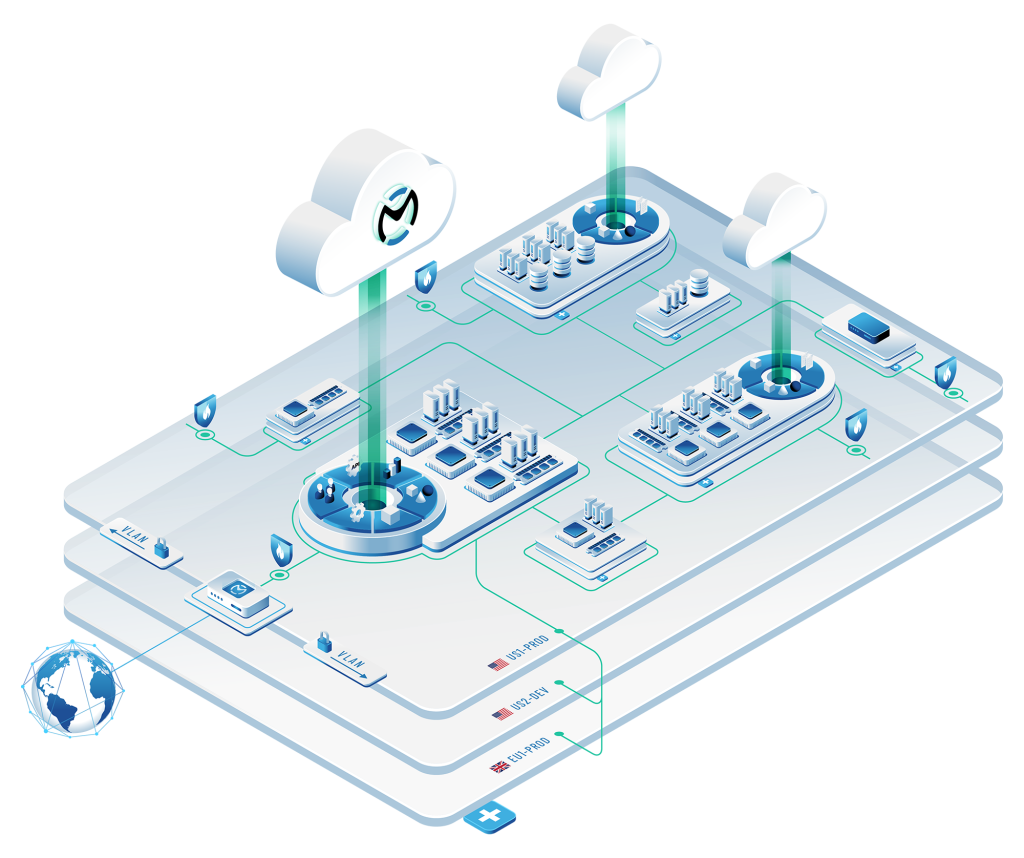
OpenMetal hosted private clouds are deployed using a Cloud Core cluster consisting of three hyper-converged servers.
These nodes run OpenStack for compute and networking and Ceph for distributed storage, creating a fully redundant cloud platform that supports virtual machines, Kubernetes clusters, and large-scale infrastructure workloads.
Core Components
Cloud Core Cluster
Three enterprise servers form the control and compute foundation of the cloud environment. This configuration provides quorum for high availability and enables resilient infrastructure services.
OpenStack Platform
OpenStack provides the API-driven cloud platform used to manage compute, networking, and storage resources.
Users can deploy virtual machines, configure software-defined networks, and automate infrastructure through APIs or Terraform.
Ceph Distributed Storage
Ceph provides distributed block storage across the cluster. Because data is replicated across nodes, workloads can survive individual hardware failures without service disruption.
Software-Defined Networking
OpenStack networking enables advanced capabilities including:
- isolated tenant networks
- floating IPs
- VLAN and overlay networking
- load balancing and routing services
This architecture delivers the same cloud capabilities teams expect from hyperscalers, but with dedicated infrastructure and transparent pricing.