























Q: What is the difference between Intel TDX and Intel SGX on OpenMetal servers?
Intel TDX isolates entire virtual machines from the hypervisor and other VMs; Intel SGX isolates individual application-level code regions from the OS and other processes — both are available on OpenMetal v4 bare metal servers.
Explore confidential computing infrastructure
TDX operates at the VM boundary. Each Trust Domain runs a complete guest OS with its own memory encryption key and CPU state, enforced by the CPU memory controller. The hypervisor can manage the TD lifecycle but cannot read or modify TD memory. TDX is the right choice for workloads running full OS stacks that require isolation from the infrastructure operator or co-located software — healthcare applications, financial transaction processors, multi-tenant SaaS.
SGX operates below the OS boundary, isolating specific code regions called enclaves from the host OS, hypervisor, and other processes. Enclaves are suited for key management services, cryptographic operations, and multi-party computation where a small, verifiable code region needs to execute without exposure to the broader OS environment. The XXL v4 provides 128GB of EPC for SGX enclaves.
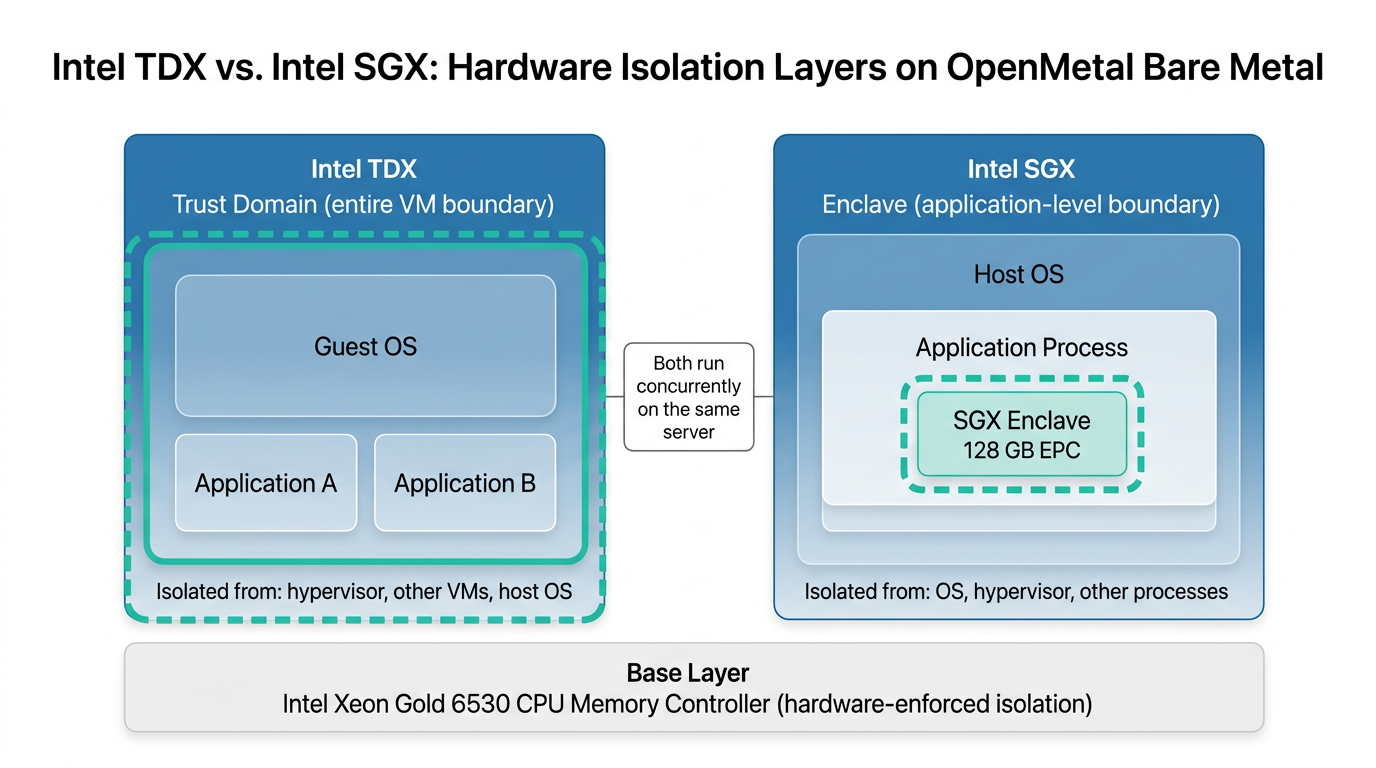
TDX and SGX can run concurrently on the same server — TDX VMs handling application workloads while SGX enclaves manage key material or attestation services.
Interested in OpenMetal Products?
Schedule a Consultation
Get a deeper assessment and discuss your unique requirements.