






















Q: How does the larger L3 cache on the Large v5 improve database and analytics workloads?
The Large v5’s 144 MB total L3 cache (72 MB per Xeon 6517P) is roughly 92% larger than the Large v4’s 75 MB total — the additional on-die cache keeps more of a query’s working set close to the cores, reducing DRAM round-trips that dominate latency on cache-bound database and analytics paths.
Database engines like PostgreSQL, MySQL, ClickHouse, and Oracle keep frequently-accessed buffer-pool pages, index structures, and query-plan state in CPU-adjacent memory whenever they fit. When the working set exceeds L3 capacity, every cache miss forces a DRAM fetch — typically 80-100 nanoseconds versus 5-15 nanoseconds for L3 — which compounds quickly on per-query timing. Nearly doubling total L3 lets workloads with previously-uncached hot data pin more of their working set on-die: index nodes, JIT-compiled query plans, columnar segment metadata, frequently-rebuilt aggregates.
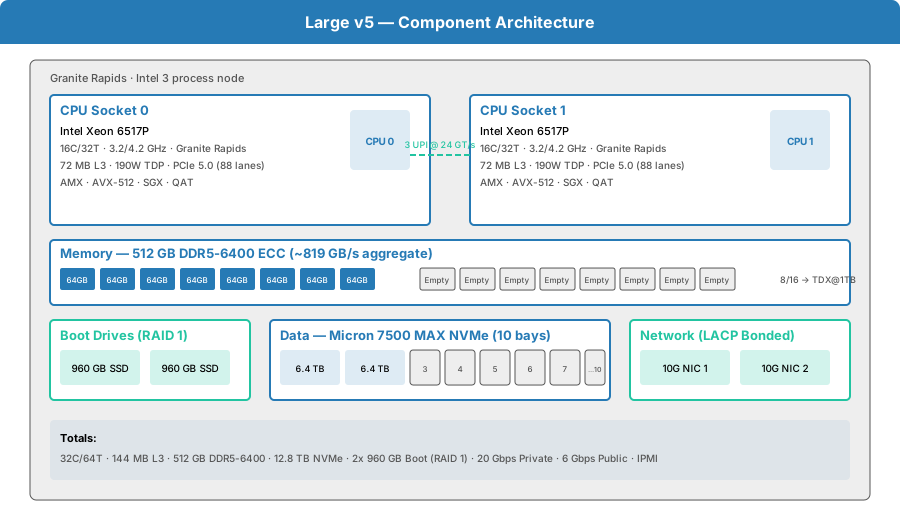
Analytical workloads see the same effect from a different angle. Presto, Spark, and ClickHouse execute vectorized column scans that benefit when whole columnar segments stay in L3 between operators. JIT-compiled execution plans (PostgreSQL’s LLVM JIT, ClickHouse’s runtime code generation, Spark’s WholeStageCodegen) live in L3 as instruction cache; smaller cache forces re-fetching of generated machine code from L2 or RAM. The L3 boost on the v5 combined with DDR5-6400 (23% bandwidth increase over the v4’s DDR5-5200) reduces both cache misses and the cost of each miss when one does occur.
For deployments that were already running cache-sensitive workloads on the Large v4 — multi-instance PostgreSQL with large shared buffers, ClickHouse aggregating data warehouses, or Proxmox-hosted database VMs competing for memory bus access — migrating to the Large v5 typically produces measurable per-query latency improvements without changing software configuration. The 32-core / 64-thread footprint stays identical so sizing assumptions carry forward.
Interested in OpenMetal Products?
Schedule a Consultation
Get a deeper assessment and discuss your unique requirements.