

























Q: How does OpenMetal’s fixed-cost GPU pricing avoid the cloud “idle silicon tax”?
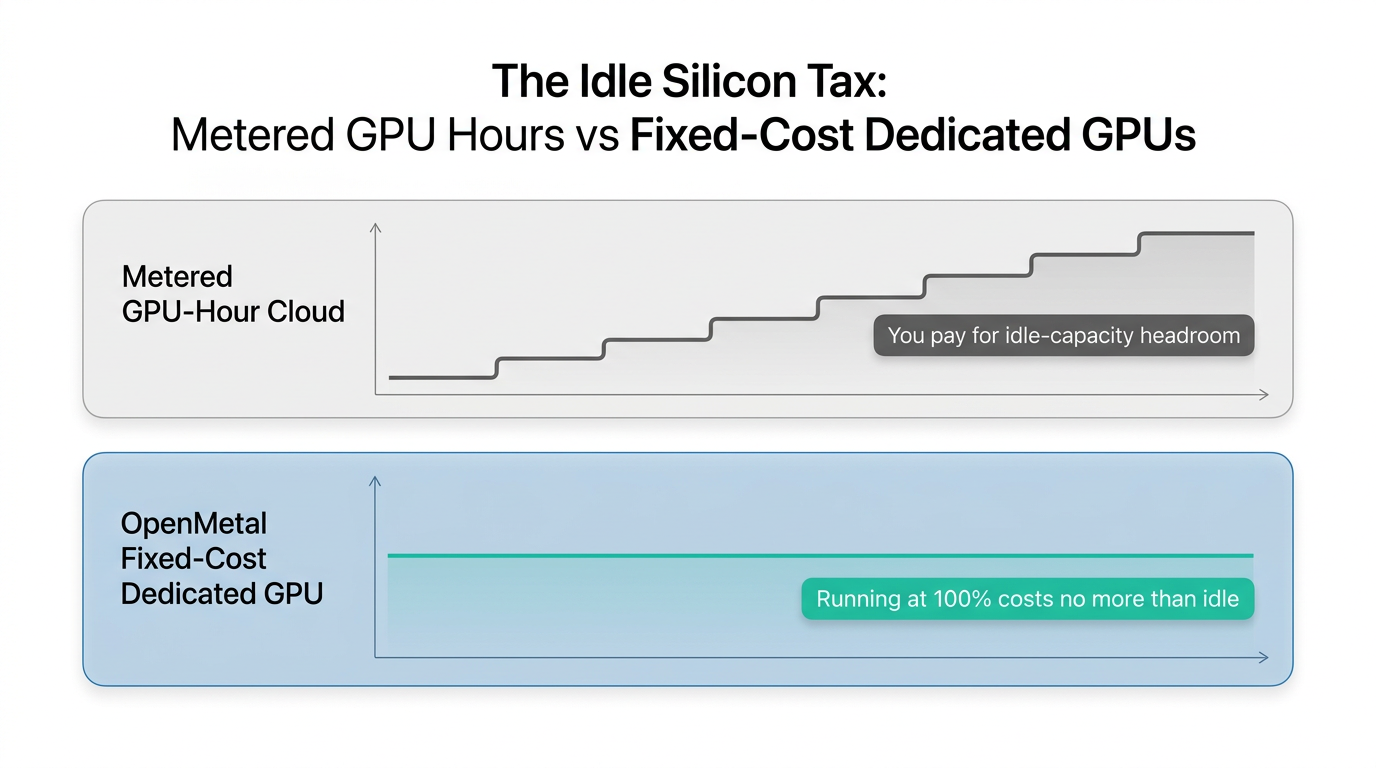
OpenMetal charges a fixed monthly rate for a dedicated GPU server, so running the card at 100% costs no more than leaving it idle; there is no per-GPU-hour meter bundling an elasticity premium into every hour.
On metered GPU-hour clouds, the per-hour rate bakes in the provider’s own idle-capacity risk and margin, so you pay for burst headroom whether or not your workload is bursty. A steady, high-utilization job effectively subsidizes other tenants’ elasticity. That premium is the “idle silicon tax.”
Because an OpenMetal GPU server is single-tenant and billed at a fixed monthly rate with included egress, the marginal cost of running it harder is zero. That inverts the incentive: instead of minimizing GPU-hours, you maximize utilization on hardware you already pay for. For sustained training runs and always-on inference endpoints, the workloads that keep a GPU busy, the fixed-cost model is typically far cheaper than metered hours plus per-GB egress.
Metered cloud still fits genuinely spiky, scale-to-zero inference or short one-off experiments. For steady GPU demand, dedicated and fixed-cost wins on economics.
Interested in OpenMetal Products?
Schedule a Consultation
Get a deeper assessment and discuss your unique requirements.